
Cart 0

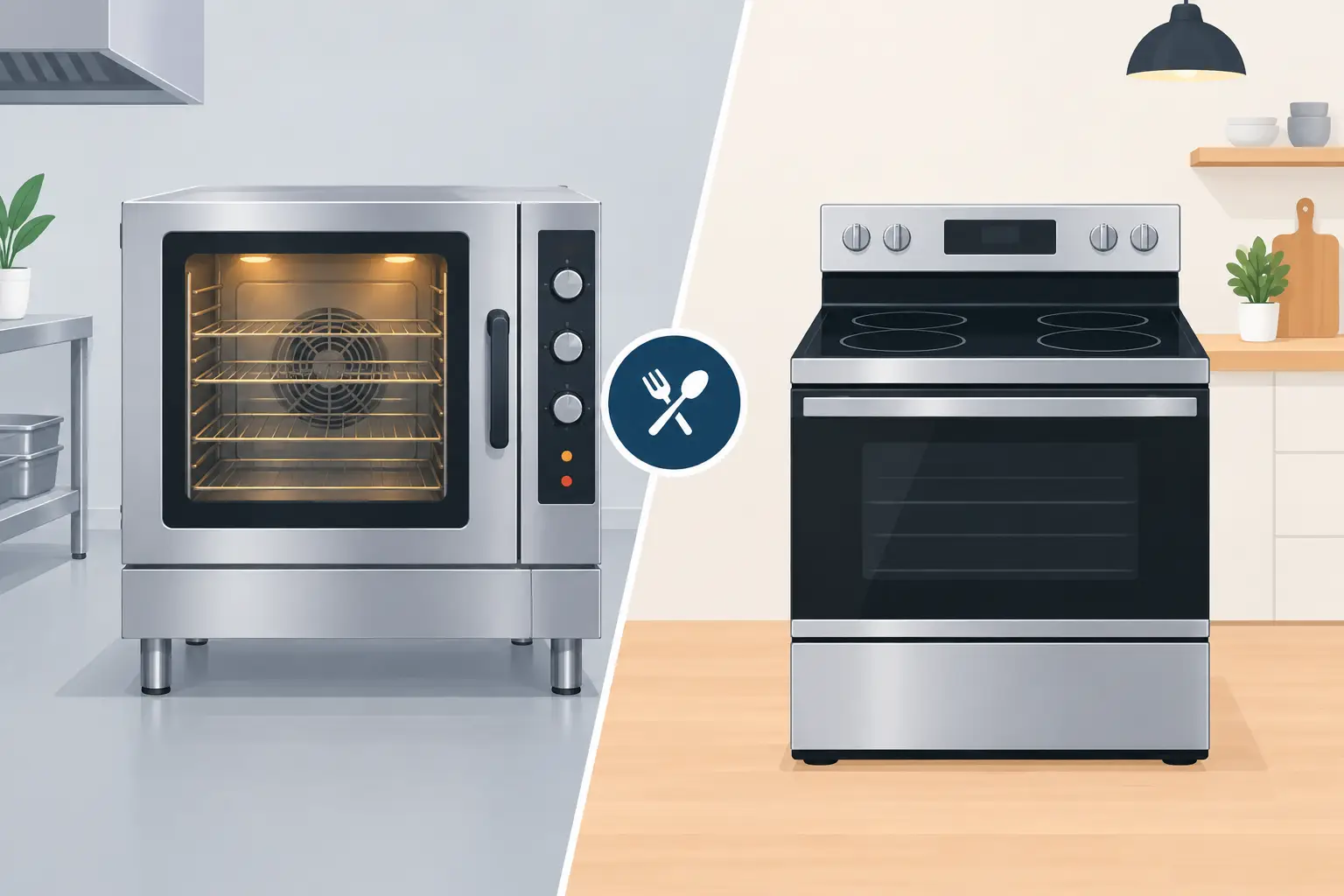
A packed dinner service and a busy family kitchen have one thing in common: every appliance has to earn its space. When comparing a commercial oven vs electric cooker, the better choice is not simply the one with more power. It is the one that matches how much you cook, what you serve, and how your kitchen needs to move.
A commercial oven is built around enclosed, high-capacity baking, roasting, and finishing. An electric cooker is designed for direct heat at the cooking surface, giving you responsive control for boiling, frying, simmering, and sautéing. They can work beautifully together, but they solve different parts of the cooking process.
Commercial Oven vs Electric Cooker: Start With the Menu
Think first about the food leaving your kitchen. If your menu depends on roasted meats, baked pastries, tray-baked dishes, pizzas, casseroles, or large batches that need even surrounding heat, an oven is central to the operation. A commercial model is designed to produce consistent results across repeated cycles, even when the kitchen is working at full pace.
If most dishes begin in a pan or pot, an electric cooker may have the greater daily impact. It supports the essential work of building sauces, preparing soups, searing proteins, steaming vegetables, and cooking noodles or rice. For many households, it is the appliance used at nearly every meal. For cafés, food stalls, and restaurants, it can be a fast, controlled station for made-to-order dishes.
The key distinction is simple. Ovens cook with hot air in an enclosed chamber. Electric cookers apply heat directly to cookware. One is not a replacement for the other unless your menu is unusually narrow.
The Core Differences That Affect Daily Cooking
Capacity and batch production
A commercial oven is the stronger choice when volume matters. Its chamber can hold multiple trays, pans, or racks, allowing a kitchen team to prepare many portions in the same cooking cycle. This helps a bakery maintain output through the morning, a restaurant roast proteins before service, or a caterer prepare side dishes in quantity.
An electric cooker handles volume differently. Its capacity is determined by the number of cooking zones and the size of the cookware placed on them. A large stockpot can feed a crowd, but it still needs attention from a cook. For kitchens that prepare several sauces, soups, or stir-fried dishes at once, multiple cooking zones can improve the flow of service.
For a homeowner who hosts often, this difference is equally practical. An oven can handle a roast, baked pasta, or desserts while the electric cooker keeps gravy, vegetables, and side dishes moving. That combination turns a crowded meal into a more enjoyable moment of sharing.
Speed and heat control
Electric cookers are valued for immediate, focused cooking. The heating surface delivers energy where it is needed, making it easier to bring water to a boil, hold a gentle simmer, or adjust heat as ingredients change. The exact response depends on the technology and the cookware, but the basic advantage remains: the cook has direct control over the pan.
A commercial oven needs preheating time, yet it creates a stable environment once it reaches temperature. That consistency is especially useful when cooking food that needs even browning, a set baking temperature, or a reliable finish. In a busy professional kitchen, this predictability can reduce guesswork and help teams reproduce the same dish across multiple shifts.
Do not judge speed only by the first few minutes. An electric cooker may be faster for a single pan of vegetables, while an oven becomes more efficient when it can cook several trays at the same time.
Space and kitchen workflow
Counter and floor space can change the decision. Commercial ovens are larger pieces of equipment and require planning around clearance, door swing, loading, unloading, ventilation, and cleaning access. They make sense when baking and roasting are meaningful parts of the menu, not occasional extras.
Electric cookers can offer a more compact route to high-performance cooking. Built-in units create a clean, refined kitchen line, while countertop models can add a flexible cooking station where one is needed. This can be useful in a small apartment, an open-concept family kitchen, a demonstration area, or a commercial prep station that needs more capacity during peak hours.
For restaurant operators, workflow matters as much as appliance specifications. Place the oven near prep and finishing areas if trays move in and out all day. Position electric cookers where cooks can safely access ingredients, pans, utensils, and plating space without crossing paths with the rest of the team.
Commercial Oven vs Electric Cooker: Consider Ownership Costs
The purchase price is only one part of the investment. A commercial oven may require more dedicated space, electrical capacity, installation work, and, depending on the model and local requirements, ventilation planning. It should be selected with the expected output in mind. Buying too small can create delays during service, while buying far beyond actual demand can tie up space and energy.
An electric cooker can be a practical choice when you want precise everyday cooking without committing to a large oven chamber. It can also support an all-electric kitchen strategy, provided the electrical supply is properly planned. Before purchasing any commercial equipment, confirm voltage, amperage, circuit requirements, and local building and foodservice rules with qualified professionals.
Energy use also depends on behavior. An oven running for hours with only one small tray inside is rarely the most efficient approach. An electric cooker using correctly sized cookware with lids can concentrate heat effectively for many daily tasks. Choose based on the cooking load you actually expect, not the maximum load you might face once a year.
Durability, Safety, and Cleaning
Commercial equipment must stand up to repetition. In a restaurant, the appliance may run through breakfast, lunch, prep, and dinner service with little downtime. Look for durable materials, controls designed for frequent use, stable temperature performance, and surfaces that can be cleaned thoroughly at the end of a shift.
For home kitchens, durability still matters, especially for families who cook daily or entertain regularly. Modern design should not mean delicate design. A well-chosen electric cooker can keep the kitchen looking polished while delivering the dependable heat needed for everyday meals.
Safety should guide the layout as well as the purchase. Ovens need careful handling around hot doors, racks, and heavy trays. Electric cookers require appropriate cookware, clear working space, and attention to handles, spills, and hot surfaces. In commercial settings, staff training and cleaning routines protect both the equipment and the people using it.
When a Commercial Oven Is the Better Investment
Choose a commercial oven when your business relies on baking, roasting, holding multiple tray-based dishes, or producing repeatable batches. It is especially valuable for bakeries, pizza operations, caterers, restaurants with roasted menu items, and kitchens that need to prepare ahead for a strong service period.
A commercial oven can also make sense for serious food production at larger venues, where a standard household oven cannot keep pace. The advantage is not just size. It is the ability to build a more organized production rhythm, with dependable capacity when the demand arrives.
When an Electric Cooker Makes More Sense
An electric cooker is often the right choice for homes, smaller commercial concepts, and any kitchen where pan cooking is the center of the menu. It gives cooks flexibility for fast meals, sauces, soups, stir-fries, and one-pan dishes, while supporting a clean, contemporary kitchen design.
It can also be a smart addition rather than an either-or decision. A restaurant may use its oven for batch roasting and baking, then rely on electric cookers for à la carte cooking. A family kitchen may use an oven for weekend entertaining while the electric cooker handles breakfast, lunch, and dinner throughout the week.
VEES designs kitchen solutions around this real-world balance: dependable performance for the work of cooking, paired with the convenience and elegance that make people want to spend time in the kitchen.
The most satisfying kitchen is not defined by the biggest appliance. It is defined by equipment that supports the way you cook, helps your team or family move with confidence, and leaves more room for the meals worth sharing.