
Cart 0

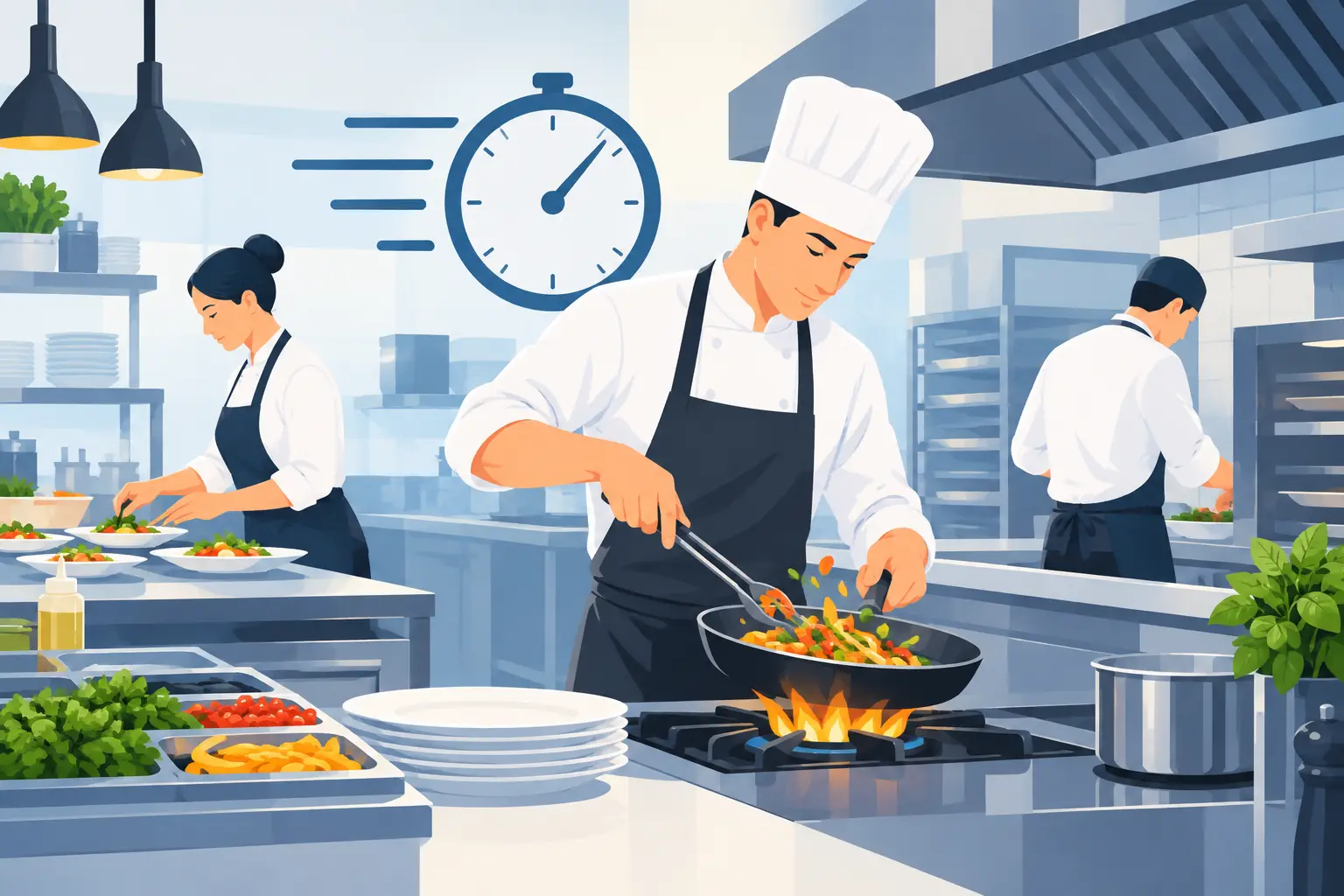
The ticket rail starts filling, a large party arrives without a reservation, and the kitchen is suddenly working against the clock. To improve restaurant cooking speed in that moment, the answer is rarely asking cooks to move faster. Real speed comes from a kitchen designed to reduce waiting, searching, repeating, and recovering from avoidable mistakes.
For restaurant operators, faster cooking should mean more than shorter ticket times. It should protect flavor, presentation, food safety, and the calm confidence guests can feel from the dining room. The most productive kitchens create a rhythm where people, preparation, and equipment work together.
Improve Restaurant Cooking Speed by Fixing the Flow
A slow line often begins before the first pan reaches the heat. Watch a busy service closely and look for the seconds that disappear: a cook walking to reach utensils, waiting for a burner, opening an overfilled refrigerator, or asking where a prepped ingredient has gone. These small interruptions quickly become long ticket times when orders stack up.
Start with the path of each high-volume dish. An order should move in one direction, from ticket to prep, cooking, plating, pass, and pickup. When staff must cross paths or leave their stations repeatedly, the layout is working against them. Place the ingredients, tools, pans, and garnishes used most often within immediate reach of the person who needs them.
This does not mean every station needs to hold every item. Overcrowded stations create a different kind of delay. Instead, organize each station around its core tasks. A sauté cook needs fast access to oils, seasoning, proteins, pans, and finishing elements. A fry station needs baskets, tongs, seasoning, landing trays, and packaging or plating supplies positioned for a clean handoff.
The pass deserves the same attention. If completed plates wait because garnishes, sauces, or heat lamps are not ready, the kitchen loses the benefit of quick cooking. Assign a clear final-check process so plates leave the line with fewer questions and fewer remakes.
Design for the Rush, Not the Quiet Hour
A kitchen may feel efficient at 3 p.m. and still struggle at 7:30 p.m. Build station capacity around peak demand. Review sales data to identify the dishes that arrive together and the equipment they compete for. If three best-selling entrées all need the same oven at the finish, that oven becomes the bottleneck regardless of how skilled the team is.
Sometimes the solution is a menu adjustment, such as changing a finish, batching a component, or offering a preparation that uses underutilized equipment. Sometimes it is an equipment decision. More burners are helpful only when the team also has the prep capacity, pan space, and ventilation support to use them well.
Make Mise en Place a Measurable Standard
Mise en place is often described as preparation, but in a commercial kitchen it is also time management. The goal is not simply to prep more. It is to prep the right amount, in the right format, at the right time.
Each shift should begin with par levels based on realistic sales patterns, reservations, delivery volume, and daypart. A lunch rush may require a different balance of sauces, proteins, garnishes, and sides than dinner. When par levels are based only on habit, staff either stop mid-service to prepare more product or overproduce food that loses freshness.
Set clear standards for how ingredients are portioned and stored. Pre-portioned proteins, labeled sauce bottles, measured spice blends, and properly cut vegetables reduce decisions during service. They also make results more consistent across cooks and shifts. The chef should be able to see quickly whether a station is ready rather than relying on a vague answer that everything is “almost done.”
A strong prep list includes quantity, cut or portion specification, storage location, deadline, and the person responsible. It should also identify what can be completed ahead without compromising quality. Crisp herbs, delicate fried items, and certain sauces may need later preparation. Stocks, braises, dressings, and portioned proteins can often be handled well before service.
Choose Equipment That Keeps Up With Demand
Cooking speed depends on reliable heat. A burner that takes too long to recover, an oven with uneven temperature, or a hood system that cannot support a busy line turns even the best workflow into a compromise. Commercial equipment should be selected for how the menu actually cooks, not only for how it looks on an opening-day floor plan.
For high-output stations, responsive gas hobs can help cooks move quickly between searing, simmering, and finishing. Electric cooking equipment can offer controlled, consistent heat where precision is central to the menu. Ovens should have enough usable capacity for the restaurant’s busiest service period, with recovery performance that matches frequent door openings and batch cooking.
Durability matters just as much as raw output. Equipment that is difficult to clean, unstable under heavy use, or frequently out of service creates delays that no shift leader can schedule around. VEES commercial kitchen solutions reflect the value of dependable performance, safety-focused design, and practical cooking control for teams that need equipment to support the pace of service.
Do not overlook small equipment. Sharp knives, flat griddles with even heating, correctly sized pans, reliable rice cookers, and organized holding equipment can save more time every day than a major renovation. The right tool reduces extra handling and lets cooks focus on the food in front of them.
Protect Heat Capacity Throughout Service
Preheating is one of the simplest ways to improve restaurant cooking speed, yet it is often inconsistent. Build equipment warm-up checks into opening procedures, including ovens, griddles, fryers, holding cabinets, and sauce stations. Starting cold or underheated forces cooks to compensate, producing longer cook times and uneven results.
Avoid filling every burner or oven shelf simply because it is available. Overloading reduces airflow, lowers surface temperature, and slows browning. Batch cooking can be faster than cooking every order individually, but only when batch size respects the equipment’s real capacity.
Maintenance also protects speed. Clean burners, calibrated thermostats, functioning door seals, clear ventilation, and inspected electrical connections prevent gradual performance loss. A kitchen should not wait for an equipment failure during a Saturday rush to discover that a key unit has been underperforming for weeks.
Build a Menu That Can Be Executed Quickly
A broad menu can attract guests, but too many distinct techniques, ingredients, and last-minute steps can slow the kitchen down. The best restaurant menus feel generous to the guest while remaining disciplined behind the scenes.
Look for components that can serve several dishes without making every plate feel the same. A well-made roasted vegetable mix, signature sauce, or seasoned grain can support multiple menu items when paired with different proteins and finishes. This reduces prep complexity, purchasing variation, and station clutter.
Be careful not to simplify so aggressively that the food loses its identity. A restaurant known for made-to-order cooking should not replace every fresh element with a held component just to chase a lower ticket average. The better question is which steps genuinely need to happen after the order is placed. Guests will wait for a steak cooked properly. They should not wait because the cook has to locate the seasoning or start a sauce from scratch.
Test every new menu item during a simulated rush. Record not only its cook time but also its pan requirements, oven dependency, plating steps, and impact on other dishes. A dish that takes eight minutes in isolation may cause a twenty-minute delay when it competes with five other orders for the same station.
Train for Clear Calls and Fast Decisions
Speed becomes unreliable when team members operate as individuals instead of a coordinated line. Clear communication prevents duplicate work, missed modifications, and plates that sit waiting for one final component.
Use concise calls that the whole kitchen understands. Cooks should know when to fire, when to hold, when an item is dragging, and when a server needs an update. The expo should see the full board and protect the sequence of the meal, not simply call tickets in the order they print.
Cross-training is valuable, but it needs structure. During peak periods, every person should have a primary responsibility. A cook who constantly leaves their station to solve another problem may be helpful, but the line loses predictability. Train backup coverage for breaks, absences, and spikes in volume, then make the handoff process simple and visible.
After service, spend ten focused minutes reviewing where time was lost. Ask which dish created the longest wait, what ran out first, where communication broke down, and whether equipment held the team back. This is not a blame exercise. It is a practical way to make tomorrow’s service smoother than today’s.
Fast restaurant cooking is built through thoughtful choices before the rush begins. When the kitchen is organized around real demand, stocked with dependable equipment, and led by a team that knows its rhythm, speed becomes part of the guest experience: warm food arriving at the right moment, prepared with care and ready to be shared.