
Cart 0

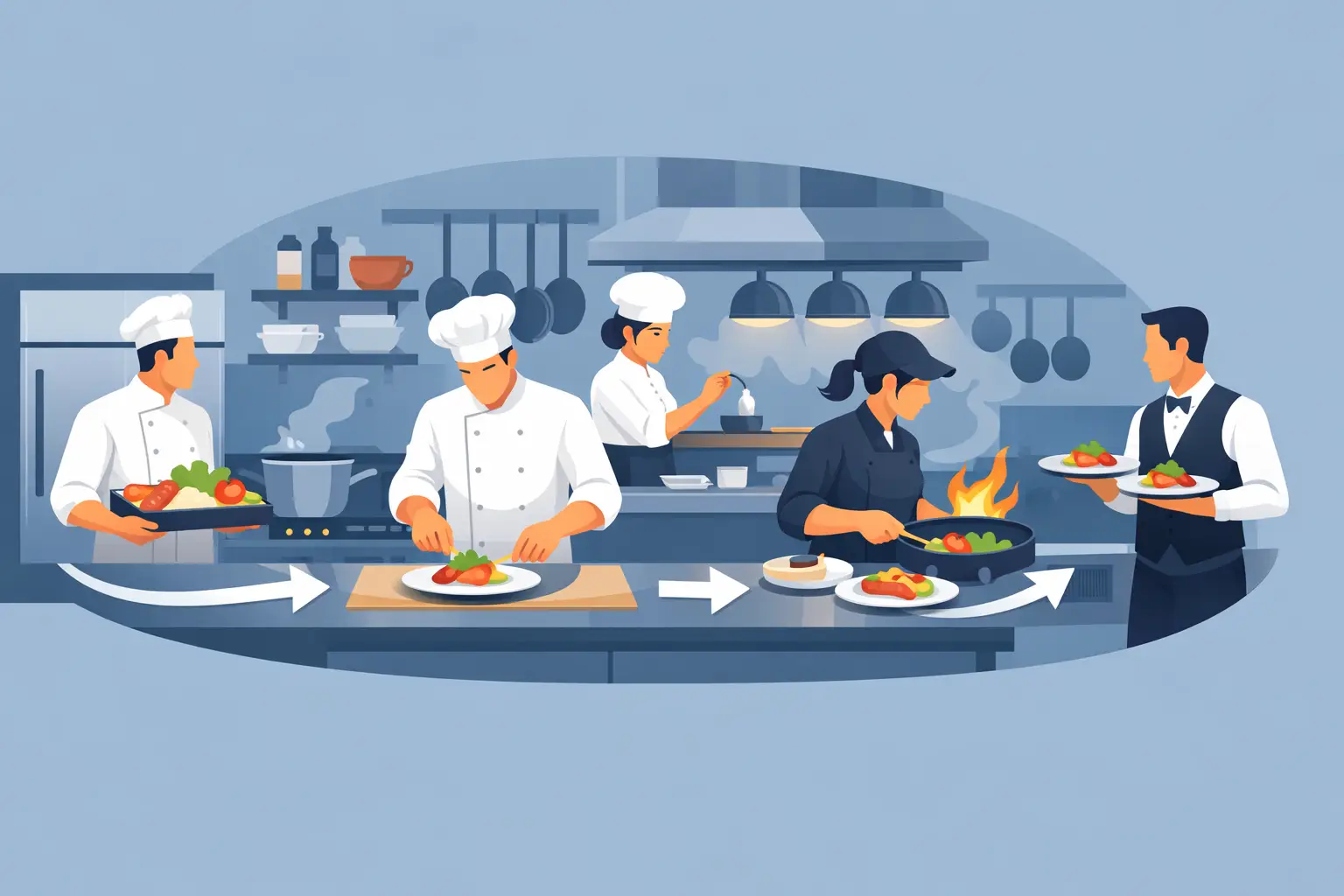
A dinner rush is rarely lost because a chef cannot cook. It is lost when ingredients are stored too far from prep, tickets arrive without a clear firing order, or a finished plate waits for its garnish. A well-planned restaurant kitchen workflow example shows how food, people, equipment, and information should move through the kitchen with less waiting and less guesswork.
For restaurant owners and culinary teams, workflow is more than an operational diagram. It affects ticket times, food consistency, labor pressure, energy use, and the guest experience. The best setup is not necessarily the largest kitchen or the one with the most equipment. It is the one that gives every task a logical place and gives the team a dependable rhythm.
What a Restaurant Kitchen Workflow Example Looks Like
Consider a 90-seat casual restaurant serving grilled proteins, rice bowls, noodles, salads, and a small dessert menu. The kitchen opens for dinner at 5:00 p.m., with the busiest period running from 6:30 to 8:30 p.m. Its workflow follows a one-way path: receiving, storage, prep, cooking, plating, pass, service, then cleaning.
The goal is simple: raw ingredients should not cross paths with finished food, and cooks should not need to walk across the kitchen for items they use every few minutes. Each unnecessary step becomes more costly when 20 tickets are on the rail.
1. Receiving and storage set up the entire shift
Deliveries arrive at a designated receiving point near the back entrance. A manager or senior prep cook checks temperatures, freshness, quantities, and packaging before goods enter the kitchen. Dry goods move to shelving, chilled products go directly to walk-in refrigeration, and proteins are stored below ready-to-eat items to support food safety.
This first stage can feel separate from service, but it shapes every later task. If deliveries are placed wherever there is room, the prep team loses time searching for ingredients and stock rotation becomes unreliable. Clear labels, date marks, and assigned storage zones reduce that friction.
2. Prep turns the menu into ready-to-cook components
From 2:00 to 4:30 p.m., the prep station portions proteins, washes produce, prepares sauces, cooks rice, and organizes garnishes. The prep cook works from a production sheet based on reservations, historical sales, and expected walk-in traffic.
For example, chicken is trimmed and portioned into labeled containers near the grill line. Vegetables are cut, stored in shallow pans, and moved to the cold station. Sauces are prepared in batches and placed in squeeze bottles or food-safe containers at the stations where they will be used. Rice is cooked, held safely, and replenished in smaller batches rather than left in one oversized container for hours.
The trade-off is worth managing. Excessive prep can create waste and reduce freshness, while too little prep creates panic during service. Track what is returned, discarded, and urgently prepared after service for a week. Those patterns will help the team set more accurate par levels.
3. The line is organized by cooking method and menu flow
At 4:45 p.m., the line cook checks every station before doors open. The hot line includes a grill, commercial electric cooker, sauté area, oven, and heated holding space. The cold station holds salads, chilled toppings, and desserts. The expo station sits between the line and the dining room, with a clear view of tickets and finished plates.
A practical line arrangement may look like this: proteins begin at the grill, sides are handled beside the cooker, sauces and final heating happen at sauté, and the dish moves to expo for plating. A cook should be able to complete their core task with one or two steps, not six.
Equipment placement matters here. High-output appliances should be located under suitable ventilation, with enough landing space for hot pans and safe movement. Durable, responsive cooking equipment helps cooks maintain a steady pace, but the layout still needs to support the work. A powerful cooker placed far from the ingredients or plating area cannot solve a poor workflow.
How the Workflow Runs During Service
At 6:45 p.m., a server sends an order for two grilled chicken bowls, one steak noodle dish, and one salad. The ticket appears at expo, where the expediter reads it aloud and confirms special requests. The grill cook starts the chicken and steak because they need the longest cooking time. The sauté cook prepares noodles and sauce. The cold-station cook builds the salad and readies bowl toppings.
This is called firing in sequence. Rather than each cook completing a dish independently, the team works backward from the moment the entire table should be ready. The expediter watches ticket time, calls for pickups, checks presentation, and ensures modifications are correct before plates leave the pass.
The pass is the kitchen’s quality checkpoint. It should be brightly lit, uncluttered, and supplied with plates, garnishes, order screens or ticket rails, and clean towels. If completed dishes are stacked beside raw ingredients or waiting behind a cook, the flow has broken down. Food loses temperature and the server loses precious seconds.
Communication needs a consistent format. Calls such as “two minutes on chicken” or “steak walking” are useful only when the team shares the same meaning. Keep language brief, confirm modifications aloud, and avoid using the expo station as a storage counter. Calm, direct calls create more control than shouting.
The Zones That Keep Work Moving
A productive kitchen does not need a separate room for every activity. It does need boundaries. In this restaurant kitchen workflow example, five zones carry most of the work:
- Receiving and storage keep deliveries, stock rotation, and inventory checks away from active food production.
- Prep handles washing, cutting, portioning, batching, and labeling before the line becomes busy.
- The hot line manages grilling, boiling, sautéing, baking, and hot holding.
- Cold prep and plating handle salads, chilled garnishes, desserts, and final assembly.
- Dishwashing and waste management sit away from clean plates and finished food, with a direct route back to storage.
The exact footprint depends on the menu. A pizza restaurant will prioritize dough prep, refrigeration, and oven access. A fast-casual bowl concept may need more cold wells, assembly space, and a fast handoff counter. The principle remains the same: organize the room around the highest-frequency movements, not around whichever wall happens to have an outlet.
Closing Is Part of the Workflow, Not an Afterthought
After the final ticket, the restaurant does not simply switch off the equipment and leave. The team follows a closing sequence while the shift is still fresh. Usable ingredients are cooled, labeled, dated, and returned to correct storage. The line is cleaned from top to bottom, grease and food debris are removed, and appliances are checked according to their care requirements.
One cook records low stock and prep needs for the next day. Another reviews waste, voids, and common ticket delays with the manager. If the grill station repeatedly ran out of a garnish or the sauté cook became a bottleneck, that insight should change tomorrow’s prep plan or station setup.
Reliable commercial equipment supports this discipline by making cooking performance and cleanup more manageable under heavy use. For kitchens looking to balance modern design with practical output, VEES commercial kitchen solutions can be considered as part of a broader layout plan, alongside ventilation, storage, and safe utility access.
Improve the Flow Before Buying More Equipment
When service feels slow, the instinct is often to add another appliance or another pair of hands. Sometimes that is the right investment. More often, the kitchen needs a closer look at movement and handoffs first.
Watch one full service and note where people stop, reach, wait, or turn around. Are cooks sharing a single refrigerator door? Does the dishwasher’s traffic cut through the expo area? Are servers waiting at the pass because no one calls completed orders? Small changes, such as moving frequently used pans, narrowing the menu at peak hours, or assigning one person to expo, can create a noticeable improvement without a full renovation.
A good workflow gives professionals the confidence to perform at speed while protecting the care behind every plate. Build the kitchen around the way your team truly cooks, then refine it one busy shift at a time.