
Cart 0

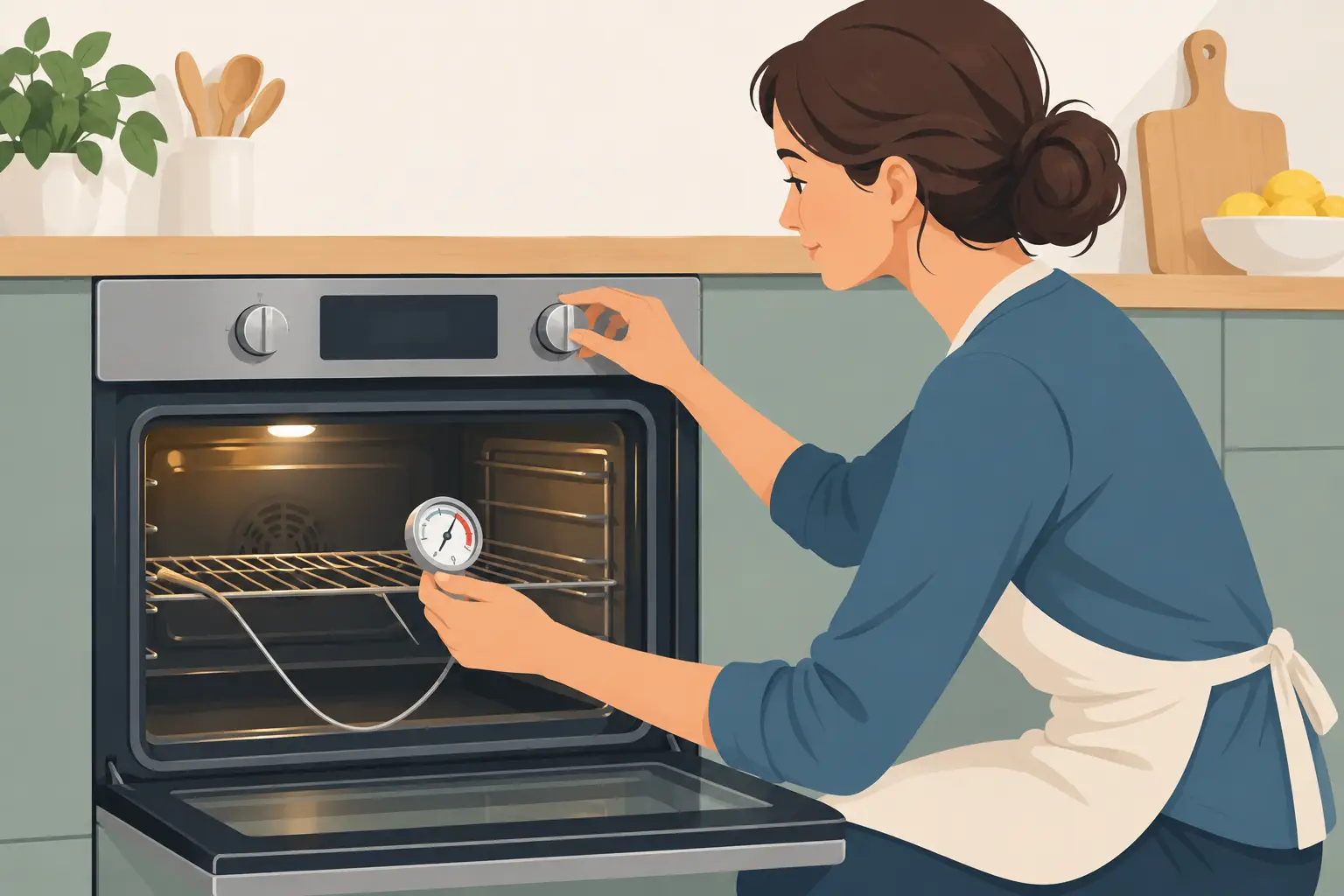
A cake that browns too soon, a roast that takes far longer than the recipe promises, or cookies that are crisp on one tray and pale on another can all point to the same issue: the oven is not heating to the temperature shown on its display or dial. Learning how to calibrate oven temperature helps bring consistency back to everyday meals, special-occasion baking, and demanding kitchen service.
An oven does not need to hold one exact temperature every second to cook well. It naturally cycles above and below its set point as the heating elements switch on and off. What matters is whether the average temperature is close enough to the setting for reliable results. A careful check tells you whether a simple adjustment is needed or whether it is time to arrange professional service.
Why oven temperature accuracy changes the result
Recipes are built around heat, time, and airflow working together. If an oven set to 350°F actually averages 325°F, muffins may spread before they rise, casseroles may take longer to reach a safe internal temperature, and bread may lack a properly browned crust. If it runs hot, delicate pastries can set too quickly on the outside while staying underdone in the center.
For home cooks, this is often the difference between a relaxed family dinner and a frustrating second attempt. For cafés, restaurants, and catering teams, a small temperature gap can affect batch consistency, food cost, service timing, and guest confidence. Accurate heat supports the kind of cooking that feels efficient, dependable, and enjoyable.
Before changing any setting, remember that a few degrees of variation is normal. Most ovens are designed to cycle within a range, and many manufacturers consider an average within about 25°F of the selected temperature acceptable. The ideal tolerance depends on the oven model and the food you prepare. Precise baking benefits from a tighter range than roasting vegetables or reheating prepared dishes.
What you need to check your oven
Start with an oven thermometer that can sit safely on a rack and read high temperatures clearly. Choose a basic analog or digital model designed specifically for ovens, not a probe thermometer meant only for checking meat. If you own a quality digital probe with an oven-safe ambient-temperature clip, that can provide a more detailed reading.
Place the thermometer in the center of the middle rack. This position is the best general reference point because it is away from the intense direct heat near the floor, ceiling, and oven walls. Remove extra pans, pizza stones, or heavy cookware first, since they absorb heat and can slow preheating.
Keep the oven door closed while testing. Opening it repeatedly releases heat and gives readings that do not represent normal cooking conditions. If your oven has a window and interior light, use them to check the thermometer whenever possible.
How to calibrate oven temperature step by step
1. Preheat fully, then allow the temperature to settle
Set the oven to 350°F and let it preheat. The preheat signal or beep means the oven has reached its initial target, but it does not always mean the cavity temperature has stabilized. Leave the thermometer inside for another 20 to 30 minutes.
During this period, the temperature will rise and fall as the oven cycles. This is expected. Do not judge accuracy from one reading taken the moment preheating ends.
2. Record several readings
Check and record the thermometer every five minutes for 20 to 30 minutes. For example, you may see readings of 340°F, 360°F, 345°F, 355°F, and 350°F. Add them together and divide by the number of readings to find the average.
If the average is close to 350°F, your oven is performing as intended. A single high or low reading does not automatically signal a problem. The average tells the more useful story.
If the average is consistently 15°F to 25°F above or below the set temperature, calibration may improve performance. If readings vary dramatically, such as swinging from 300°F to 400°F, calibration alone may not solve the issue. That pattern can indicate a worn sensor, heating-element concern, door-seal problem, or control-board fault.
3. Find the calibration control for your model
The correct method depends on the oven. Many modern electric ovens allow an electronic temperature offset through the control panel. Look in the owner’s manual for terms such as “temperature calibration,” “oven adjustment,” “temperature offset,” or “adjust oven temp.” The process often involves holding a settings button, selecting the oven-temperature menu, then increasing or decreasing the offset in small increments.
Some older ovens with mechanical knobs use a different system. The adjustment may be located behind the temperature knob or require access to a calibration screw. Turn off power at the breaker before removing any control knob or panel. If the process is not clearly explained in the manual, do not force the adjustment. A qualified appliance technician can protect both the oven and its warranty.
A modern oven may offer an offset range such as plus or minus 20°F or 35°F. If your 350°F test averaged 335°F, set a positive 15°F offset. If it averaged 365°F, set a negative 15°F offset. Make only the correction supported by your model.
4. Test again after adjusting
Once the adjustment is saved, repeat the same test at 350°F. Use the same thermometer placement, preheat time, and recording schedule. Consistent testing conditions make the comparison meaningful.
If the average is now close to the set point, the adjustment has worked. Consider checking another common setting, such as 300°F for slow baking or 425°F for roasting, especially if you frequently prepare foods that need strong, even heat. An oven can behave slightly differently at higher temperatures, although the main calibration setting should improve overall performance.
When calibration is not the answer
Calibration corrects a consistent offset. It cannot repair a faulty component or compensate for poor heat circulation. Arrange service if the oven cannot maintain a stable average temperature, takes unusually long to preheat, displays an error code, trips a breaker, produces a gas odor, or cooks unevenly from one side to the other.
For gas ovens, a noticeable gas smell after ignition, delayed ignition, or flames that look irregular require immediate attention. Stop using the appliance and follow the safety guidance from your utility provider or appliance service professional. Do not attempt to adjust gas fittings, igniters, or burners yourself.
Also inspect the oven door gasket. A cracked, flattened, or loose seal lets heat escape and may make an otherwise accurate oven struggle to hold temperature. Rack position matters too. Food placed too close to an exposed upper element can brown quickly even when the oven is correctly calibrated.
Small habits that improve cooking consistency
Calibration works best when paired with a few practical habits. Preheat for the full recommended time, particularly for baking and pizza. Use the center rack unless the recipe says otherwise, and avoid crowding the oven with large pans that block airflow.
Rotate pans halfway through when baking multiple trays, unless a recipe specifically advises against opening the door. For meats, poultry, and casseroles, use a food thermometer to confirm doneness rather than relying only on cooking time. Oven calibration improves the environment around the food; an internal thermometer confirms the food itself is ready.
Keep the oven clean, especially around vents and heating elements. Heavy grease and burnt-on residue can create smoke, affect airflow, and make cooking less pleasant. A well-maintained oven is easier to trust during busy weeknights, holiday meals, and high-volume commercial prep.
A better temperature, and better moments around the table
A dependable oven should support your plans, not make you second-guess every recipe. Whether you are baking a birthday cake, preparing a weeknight tray dinner, or producing consistent dishes for guests, a simple temperature check gives you a clearer foundation for great cooking. Take the time to test, adjust only when the evidence calls for it, and let reliable heat make more room for the moments worth sharing.