
Cart 0

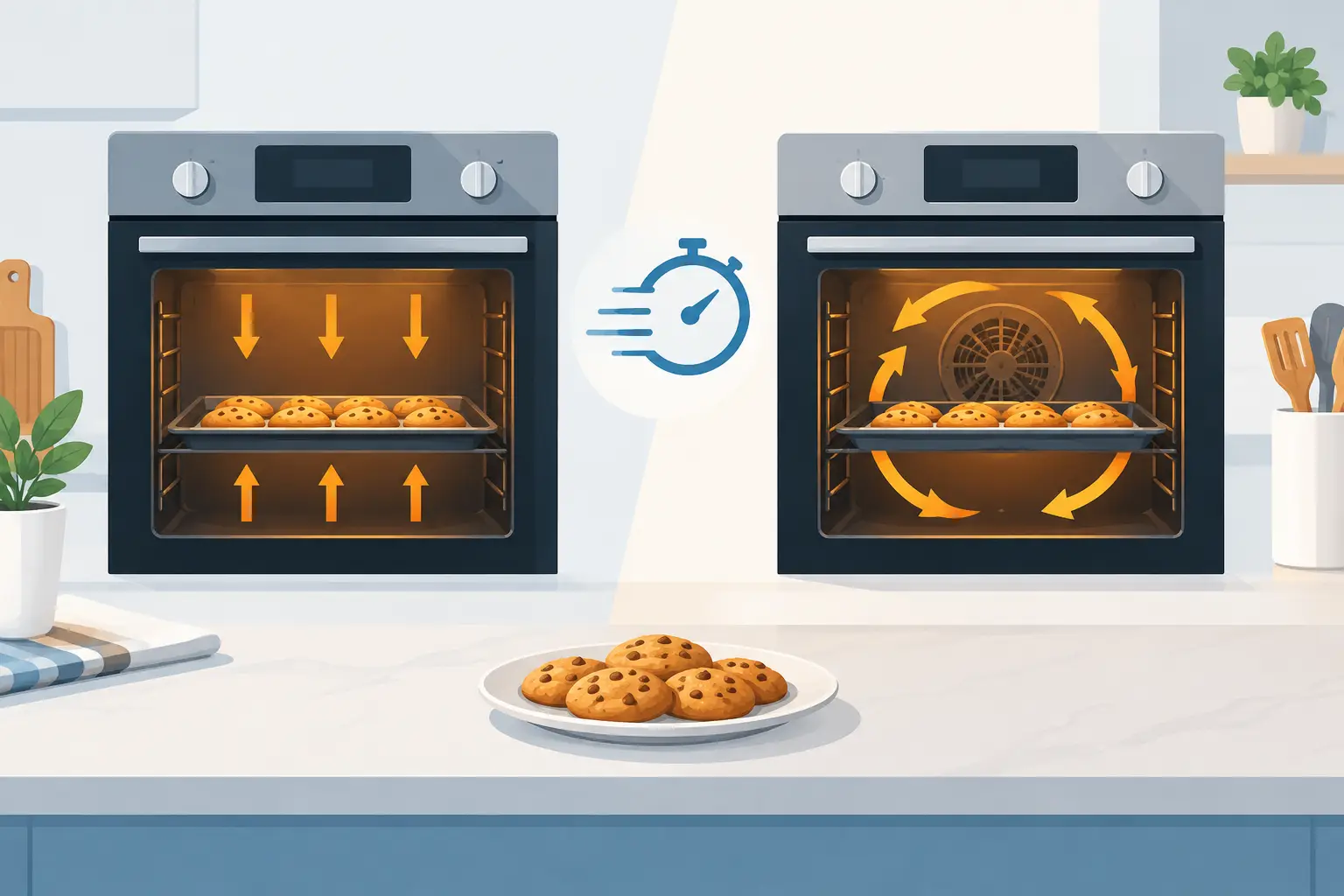
A roast chicken with crisp skin, a tray of evenly browned vegetables, and cookies that finish at the same time can make a busy kitchen feel far more effortless. But do convection ovens cook faster? Usually, yes. By circulating hot air around the food, a convection oven can reduce cooking time while creating more even browning and a satisfyingly crisp finish.
That extra speed is not a reason to simply turn on the fan and walk away. The best results come from making a few thoughtful adjustments to temperature, timing, rack position, and cookware. Once you understand how convection works, it becomes a practical advantage for family dinners, entertaining, and high-volume kitchen prep.
Do Convection Ovens Cook Faster Than Conventional Ovens?
A conventional oven heats food with stationary air. Heat rises, cooler areas remain around the edges, and the temperature can vary from one rack to another. A convection oven adds a fan, and often a third heating element, to move hot air continuously through the oven cavity.
That moving air transfers heat to the food more efficiently. It also carries away the thin layer of cooler air and moisture that forms around the surface of food as it cooks. As a result, the outside of the food browns more readily, and heat reaches it more consistently from all sides.
For many recipes, convection cooking can shorten total cooking time by about 20 to 25 percent. A dish that takes 40 minutes in a conventional oven may be ready in roughly 30 to 32 minutes with convection. The exact difference depends on the food, its size, the pan, how full the oven is, and the oven’s airflow design.
Speed is only part of the benefit. When dinner needs to reach the table on time, more even heat can mean fewer tray rotations, more reliable browning, and less guesswork between batches. For home cooks and professional teams alike, consistency is what makes a faster oven truly useful.
How to Adjust Time and Temperature
There are two reliable ways to adapt a conventional recipe for convection. You can lower the oven temperature by 25°F while using approximately the original cooking time, or keep the recipe temperature and begin checking the food 20 to 25 percent earlier.
For example, a casserole written for 350°F can often cook at 325°F on convection. Alternatively, if you keep it at 350°F, check it well before its stated finish time. The better choice depends on the dish. Lowering the temperature is helpful for foods that need time to cook gently through the center, while shortening the time at the original temperature can work well for roasting and crisping.
A recipe’s listed time is always a guide, not a guarantee. Start checking early, especially when using a new oven or cooking an unfamiliar dish. Use a food thermometer for meats, poultry, egg dishes, and baked goods where doneness cannot be judged by color alone. This protects both flavor and food safety.
Let the Food, Not the Clock, Make the Final Call
Chicken is ready when its thickest portion reaches a safe internal temperature. Roasted vegetables should be tender at the center with caramelized edges. Cakes should spring back lightly or pass the appropriate doneness test for their style. Bread should have a well-developed crust and sound hollow when tapped, where applicable.
This approach matters because convection may brown the exterior before a thick dish is fully cooked in the middle. It is particularly useful with large roasts, deep casseroles, and foods that begin cold from the refrigerator. A dependable oven gives you precision; checking doneness gives you confidence.
Foods That Benefit Most From Convection Cooking
Convection is especially effective when a recipe benefits from dry, circulating heat. Roasted vegetables become more deeply caramelized, potato wedges gain crisp edges, and sheet-pan meals can cook with an appealing balance of color and tenderness. Airflow helps render fat on chicken skin and roast meats more evenly, creating a more polished result for everyday meals or guests.
It is also an excellent setting for cookies, pastries, granola, crackers, and toasted nuts. When baking multiple trays, convection can help reduce the usual difference between the top and bottom racks. Rotate pans if your oven instructions recommend it, but you may need fewer adjustments than with a conventional setting.
For restaurant kitchens and frequent home entertainers, this consistency supports a smoother workflow. Multiple trays of appetizers, baked sides, or pastries can be prepared with greater confidence when the oven maintains strong, even circulation around each pan.
Drying and dehydrating foods is another natural use. Herbs, fruit slices, jerky, and meringues benefit from airflow because it helps moisture escape gradually. Use lower temperatures and monitor closely, since thin foods can move from perfectly dry to overly crisp faster than expected.
When Convection Is Not the Best Choice
Convection is not automatically the right setting for every recipe. Foods with delicate structure can be disturbed by strong moving air before they set. Soufflés, custards, flans, delicate sponge cakes, and some quick breads often perform better with conventional heat, particularly if the recipe was developed without convection.
Cakes and muffins can also brown too quickly on top in convection mode. If you do use it, reducing the temperature by 25°F and placing the pan on the center rack can help. Watch for early color development, then loosely cover the top if necessary.
Covered dishes gain less from convection because the lid or foil traps moisture and limits direct airflow. Braises, covered casseroles, and Dutch oven meals can still cook successfully, but the speed advantage may be modest. For a final browned finish, remove the cover near the end and switch to convection for the last portion of cooking.
The same principle applies to crowded pans. If food is packed tightly together, hot air cannot reach the surfaces effectively. Vegetables steam instead of roast, and proteins lose the crisp finish that convection is known for. Use a larger pan, cook in batches, or leave a little room between pieces whenever possible.
Better Convection Results Start With Airflow
A convection oven performs at its best when hot air has space to circulate. Choose low-sided sheet pans for roasted foods rather than deep dishes that block airflow. Avoid covering the fan area at the back of the oven, and use oven-safe pans sized appropriately for the rack.
Rack placement matters, too. The center rack is the dependable starting point for most single-pan recipes. For two racks, place them in the upper and lower thirds rather than directly on top of each other. This leaves room for air to move, encouraging more even results across both trays.
Preheating remains essential. Although convection can feel faster, putting food into an oven that has not reached temperature can extend cooking time and affect texture. Give the oven time to stabilize, especially for baking, roasting, and foods where an immediate burst of heat helps create the right crust or rise.
Cookware changes the outcome as well. Dark metal pans absorb heat quickly and may increase browning, while light-colored aluminum offers a gentler result. Glass and ceramic dishes heat more gradually and retain heat longer after leaving the oven. Pairing the right cookware with convection settings helps you control color, texture, and timing with greater precision.
A Practical Way to Build Confidence
The first few times you use convection, choose familiar dishes: roasted vegetables, chicken thighs, cookies, or a sheet-pan dinner. Keep the recipe temperature 25°F lower, set a timer earlier than usual, and make a note of what happens. After two or three meals, you will learn how your oven browns, where its hottest zones are, and how quickly your preferred recipes finish.
Modern kitchen performance should make cooking feel more rewarding, not more complicated. A thoughtfully designed convection oven can help turn weekday meals into easy moments of sharing and support the pace of a professional kitchen when service is busy.
The next time a recipe calls for the oven, let airflow work in your favor: give food room to breathe, check it early, and enjoy the extra time you gain around the table.