
Cart 0

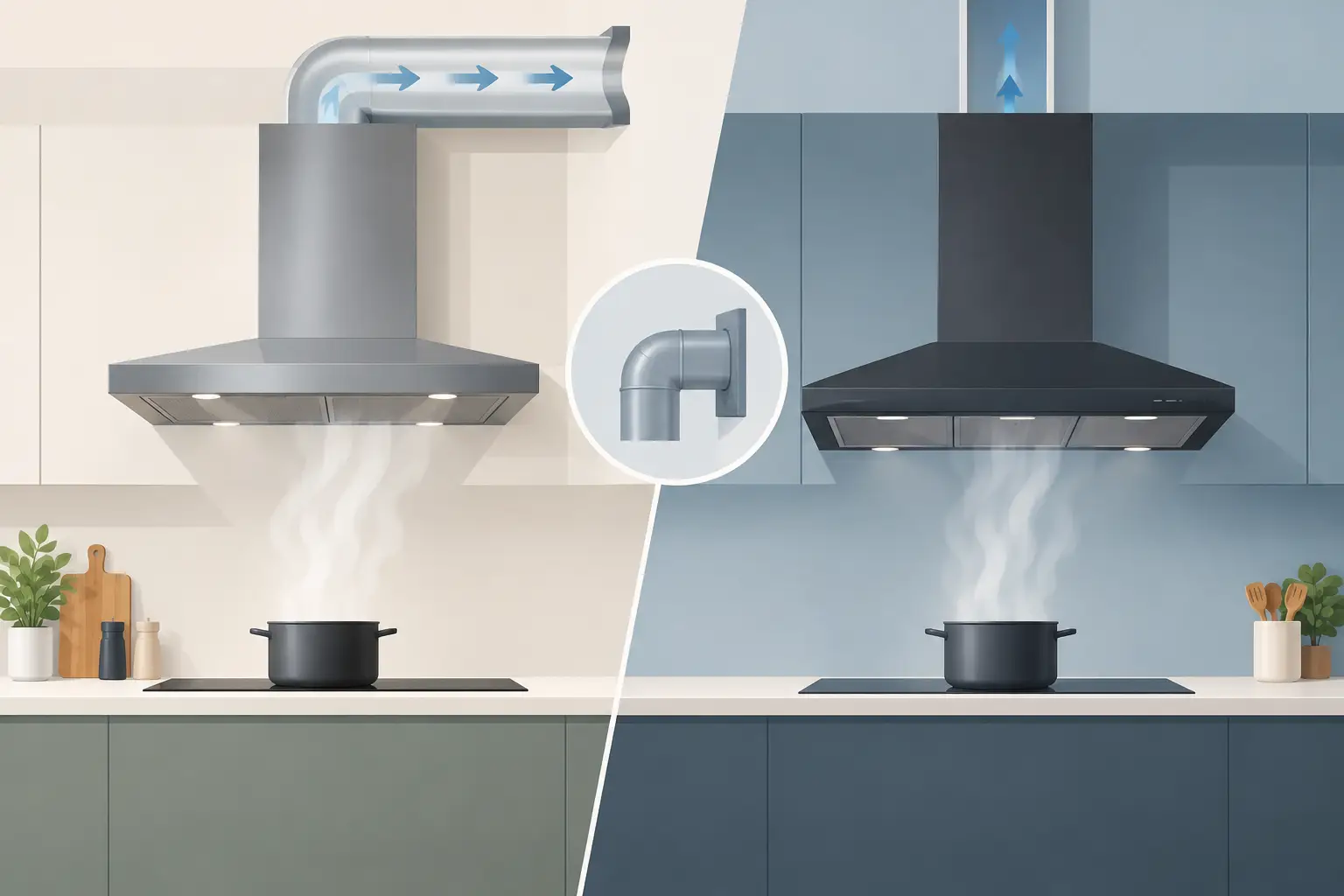
A great meal can leave behind more than a full table. Steam on cabinets, lingering spice aromas, grease on nearby surfaces, and excess heat can make the kitchen feel less inviting long after cooking ends. This ducted hood comparison focuses on the details that shape everyday comfort: airflow, hood size, noise, duct design, and the way your household actually cooks.
A ducted range hood moves cooking fumes, moisture, heat, and grease-laden air outside through ductwork. For homes that cook often – especially with high-heat stir-frying, searing, grilling, or frying – it is typically the stronger long-term ventilation choice. The best model is not simply the one with the highest number on the box. It is the one that fits the cooktop, the room, and the cooking moments your family enjoys most.
What Makes a Ducted Hood Different?
Unlike a recirculating hood, which filters air and returns it to the room, a ducted hood exhausts air outdoors. That difference matters when you want to reduce humidity, remove odors more effectively, and keep airborne grease from settling throughout the kitchen.
Ducted ventilation can be especially valuable in open-plan homes, where the kitchen shares space with a dining area or living room. Without effective extraction, the aroma of dinner may travel farther than intended. A properly selected hood helps preserve a cleaner, more comfortable setting for cooking, serving, and sharing time together.
There is a trade-off. Ducted installation requires a suitable route to the exterior, and its performance depends heavily on the duct path. A powerful hood connected to a long, narrow, twisting duct may not perform as well as a moderately powerful model with a short, smooth, correctly sized run.
Ducted Hood Comparison: Start With Airflow
Airflow is commonly measured in cubic feet per minute, or CFM. In simple terms, higher CFM means the hood can move more air. But more is only better when it matches the cooking appliance and the kitchen’s demands.
For many standard electric or gas cooktops, a hood in the mid-range can provide dependable daily performance. Higher-output gas ranges, wide cooktops, indoor grills, and frequent wok cooking usually call for greater extraction power. The faster and hotter the cooking process, the more smoke, steam, and grease the hood needs to capture before they spread.
Rather than selecting CFM in isolation, consider the cooking style. A household preparing soups, pasta, and light sautéed meals has different ventilation needs from a family that cooks several dishes at once for weekend gatherings. Restaurant operators and serious home cooks should also consider how many burners run simultaneously during their busiest periods.
Very high airflow has another consideration: it removes air from the home quickly. Depending on local codes, home construction, and hood capacity, makeup air may be required to replace exhausted air safely and maintain balanced indoor pressure. A qualified installer can advise on the requirements for your space.
Capture Area Matters as Much as Power
Airflow only works well when the hood can capture rising cooking fumes. A hood should generally be at least as wide as the cooktop, while a wider hood can offer stronger coverage, particularly for gas cooking or high-heat techniques.
For example, a 36-inch cooktop benefits from a 36-inch hood at minimum, while a wider canopy may improve capture at the front burners. This is particularly helpful when using large pans, stockpots, or a wok that produces heat and vapor beyond a small central area.
Depth matters, too. A shallow hood may look sleek but can struggle to capture smoke from front burners. When comparing designs, look at how far the canopy projects over the cooking surface, not only its width.
Hood Styles and Where They Work Best
The right configuration should complement the kitchen layout as well as the cooktop. Wall-mounted chimney hoods are a popular choice for ranges installed against a wall. Their visible chimney design gives the kitchen a polished focal point while providing a direct path for ventilation above the cooking zone.
Under-cabinet hoods suit kitchens where storage space is a priority. They can be a practical, space-conscious choice, especially in compact kitchens, provided there is enough coverage and a properly planned duct outlet.
Island hoods are designed for cooktops positioned on a central island. Because air currents can move more freely around an island, these hoods often need generous canopy coverage and adequate airflow. Their appearance matters just as much as their performance, since they are visible from several areas of the home.
Built-in or insert hoods allow a custom cabinet surround to take center stage. This option can deliver a refined, integrated look, but it requires careful planning. The enclosure must accommodate the hood, preserve clearances, and avoid restricting airflow.
The Ductwork Can Make or Break Performance
A ducted hood comparison should never stop at the hood itself. Ductwork is the route that allows the system to do its job, and a clean route creates better results.
Smooth, rigid metal ducting is generally preferred because it allows air to move with less resistance and is easier to maintain than flexible duct. Larger duct diameters can support higher airflow, while undersized ducts may increase noise and reduce extraction. Your hood specifications should guide the duct size, rather than trying to make the hood fit an existing unsuitable duct.
Keep the route as short and straight as practical. Every extra bend slows airflow. Sharp turns, long horizontal runs, and unnecessary transitions can all reduce real-world performance. An exterior wall or roof cap should also open properly and be positioned to discharge air safely outside.
For a new kitchen or renovation, plan ventilation early. It is far easier to create an efficient duct route before cabinetry, ceilings, and finishes are complete. This one decision can protect both the performance and the clean visual lines of a modern kitchen.
Noise Is a Daily-Living Feature
A range hood should clear the air without making conversation difficult. Noise is often measured in sones, with lower numbers indicating quieter operation. However, a quiet rating at low speed does not tell the full story. Check how the hood performs at the speed you are most likely to use during active cooking.
Variable fan speeds are useful because different meals create different ventilation demands. A low setting can handle gentle simmering, while a higher setting is available for searing, frying, or cooking multiple dishes at once. This flexibility supports a more pleasant kitchen environment and helps avoid using maximum power when it is not needed.
Good duct design also influences sound. Even a well-engineered motor may seem louder when air is forced through restrictive or poorly installed ductwork. For homeowners who value a calm, open kitchen, quieter operation is worth prioritizing alongside airflow.
Filters, Controls, and Features Worth Choosing
Baffle filters and mesh filters both collect grease, but they suit different needs. Baffle filters are often favored for frequent, high-heat cooking because their layered construction manages grease effectively and many are dishwasher-safe. Mesh filters are common in household hoods and can be simple to remove and clean, though they need regular attention to maintain airflow.
Choose controls that feel intuitive during real cooking. Easy-to-reach buttons, responsive touch panels, and clearly marked speed settings make a difference when hands are busy. Bright, well-positioned task lighting is also more than a finishing touch. It improves visibility for checking food color, simmer levels, and pan placement.
Some hoods include timed shutoff, delayed operation, or heat-sensing functions. These features can be useful for clearing remaining steam after a meal, but they should support solid ventilation fundamentals, not replace them. Reliable extraction, suitable coverage, and correct installation remain the priorities.
Choosing for Home or Commercial Use
A household kitchen benefits from a hood that balances performance, comfort, and visual harmony. Consider the number of people you cook for, the fuel type, the cooktop width, and how open the space is. A well-matched hood lets the kitchen remain a place for daily meals and relaxed gatherings, rather than a room that holds onto heat and cooking odors.
Commercial kitchens face a different level of demand. High-volume operations require ventilation designed for sustained use, local compliance, fire safety coordination, and the specific equipment beneath the hood. A light-duty canopy intended for home use is not a substitute for a professionally designed commercial ventilation system. Restaurant owners should work with qualified specialists to assess equipment load, clearances, suppression requirements, and code obligations.
VEES believes modern kitchen performance should make every cooking experience easier and more enjoyable. Choosing a ducted hood with the right balance of power, coverage, and refined design helps create a kitchen that is ready for the quiet weekday dinner as well as the lively meal worth sharing.