
Cart 0

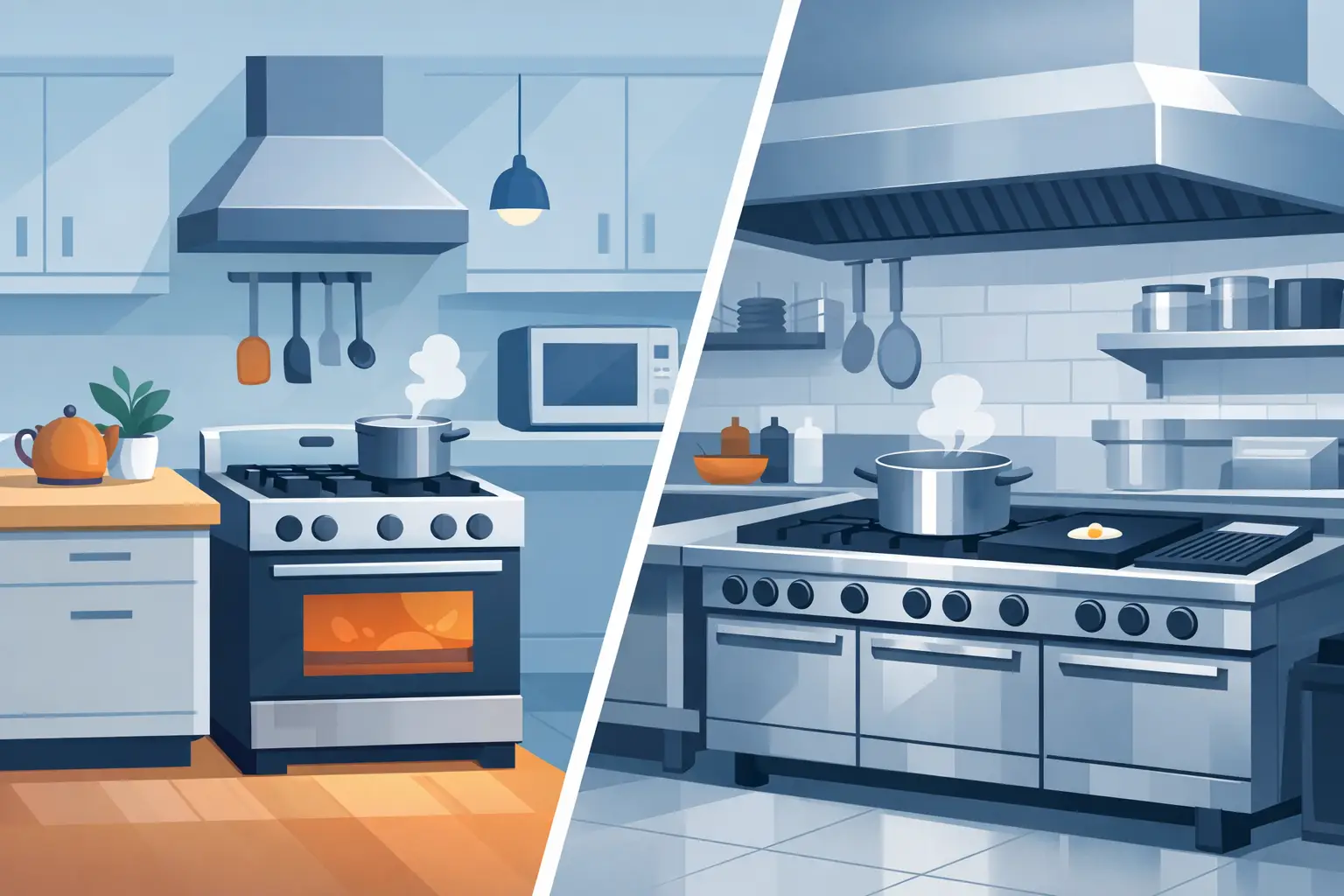
A cooker that feels fast and reliable during a Sunday family dinner may struggle when twelve orders arrive at once. That is the real difference in the household cooker vs commercial cooker decision: it is not simply about size or price. It is about matching the appliance to the pace, volume, space, and expectations of the people who cook with it.
For a home, the right cooker should make daily meals easier while complementing a modern kitchen. For a restaurant, café, catering operation, or shared kitchen, it must maintain consistent output through long, demanding service hours. Both have a place. Choosing well starts with understanding what each is built to do.
Household Cooker vs Commercial Cooker: The Core Difference
Household cookers are designed for domestic routines. They support breakfast before school, weeknight dinners, holiday gatherings, and relaxed cooking with friends. Their balance of performance, energy use, safety features, easy cleaning, and refined design makes them suitable for kitchens where comfort and appearance matter as much as cooking power.
Commercial cookers are designed for production. They are expected to handle repeated use, larger cookware, higher heat demands, and multiple dishes moving at the same time. A commercial kitchen does not pause when a burner takes longer to recover its temperature or when an oven heats unevenly. Equipment needs to help the team maintain momentum.
The distinction matters because a bigger cooker is not automatically a better cooker. A commercial unit can be unnecessary, costly, and impractical in a home. In the same way, a household model may not withstand the daily workload of a busy food business, even if it performs beautifully for family meals.
Capacity Is About More Than Pot Size
A household cooker generally accommodates standard pots, pans, and baking trays used for family portions. The cooking surface and oven cavity are sized for realistic home needs, including a large pot of soup, a skillet dinner, or a roast for guests. This keeps the appliance proportionate to the kitchen and avoids using more energy than necessary for everyday tasks.
Commercial cookers are made for volume and throughput. Their burners may support larger stockpots, their ovens may hold several trays, and their layouts are often designed for cooks working side by side. In a foodservice setting, capacity is not a luxury. It determines whether the kitchen can serve customers promptly during its busiest periods.
Consider the heaviest day, not the average day. A household that cooks for four most nights but hosts occasional celebrations may benefit from a spacious home cooker with flexible zones and a capable oven. A small restaurant that prepares sauces, fried dishes, and grilled items simultaneously needs enough working capacity for peak service, not only quiet afternoons.
Cooking Zones and Workflow
At home, fewer cooking zones can be an advantage. A clear, well-organized hob is easier to clean, easier to manage, and visually calmer in an open kitchen. Features such as responsive heat control, stable cookware support, and intuitive controls help home cooks move confidently from simmering to searing.
In a commercial kitchen, multiple high-output zones allow separate tasks to happen without disruption. One cook can reduce a sauce while another prepares soup and a third manages a rush of pan-fired dishes. The equipment becomes part of the workflow, helping the team prevent bottlenecks during service.
Heat Output and Recovery Change the Experience
Heat performance is one of the most meaningful differences between household and commercial cooking equipment. Household cookers are engineered to provide controlled, efficient heat for regular recipes. They should bring water to a boil promptly, hold a gentle simmer steadily, and give cooks the precision needed for everyday dishes.
Commercial equipment is designed to recover quickly after cold ingredients are added or a large pan is placed on the surface. This rapid recovery helps chefs produce consistent results across repeated batches. When a kitchen is preparing dozens of portions, small losses in heat can become slower tickets, uneven browning, and frustrated staff.
Higher output, however, brings trade-offs. Commercial cooking equipment may require more ventilation, more fuel or electrical capacity, and more careful installation planning. It can also generate more heat in the room. For a residential kitchen, a powerful household cooker paired with suitable ventilation can offer the control families want without turning the kitchen into a professional line.
Durability for Real-World Use
A household cooker is built for frequent use, but its duty cycle reflects life at home. It may run several times a day, with quieter periods between meals. Materials, controls, and safety systems are designed to deliver lasting everyday performance while keeping operation approachable for every member of the household.
A commercial cooker must tolerate continuous demand. It may operate from prep through closing, with cookware constantly moved across its surface and staff using it in quick succession. Commercial-grade construction is typically focused on heavy-duty components, serviceability, and surfaces that can withstand more intensive cleaning routines.
This is why restaurant operators should resist the temptation to choose domestic equipment solely for a lower initial price. Replacing or repairing an under-specified unit can interrupt service and cost more than selecting the right equipment from the beginning. Conversely, homeowners should not assume commercial construction alone will improve their kitchen. The best choice is the one that suits the way the kitchen actually lives.
Safety, Ventilation, and Installation Requirements
Every cooker should support safe cooking, but the installation context differs significantly. Household appliances often prioritize family-friendly features, straightforward controls, and designs that integrate neatly with home cabinetry. Proper clearances, professional connection, and an effective range hood remain essential, especially for frequent frying or high-heat cooking.
Commercial settings face additional considerations. Local codes may govern gas supply, electrical load, fire protection, ventilation, drainage, clearances, and equipment placement. A commercial cooker should be selected as part of the entire kitchen plan, not as an isolated purchase. The hood system, prep areas, cold storage, and staff movement all affect safety and productivity.
For either setting, ventilation deserves close attention. A well-matched hood helps remove heat, steam, smoke, and cooking odors, keeping the space more comfortable and helping preserve the kitchen’s finishes. It is a practical investment in a cleaner, more enjoyable cooking environment.
Energy Use and the True Cost of Ownership
Purchase price is only one part of the decision. A household cooker can be a sensible long-term choice for families because it is sized for domestic energy use and does not demand commercial infrastructure. Choosing features you will use regularly, rather than paying for excess capacity, can bring better value over time.
Commercial equipment can cost more upfront, but it may be the more economical option for a business that relies on it every day. Faster production, greater durability, and fewer workflow delays can protect revenue during busy hours. The key is to assess total ownership cost: installation, ventilation, energy consumption, cleaning, maintenance, downtime, and expected lifespan.
A growing food business should also consider where it will be in two or three years. Buying too small can limit expansion, while buying far beyond current demand can strain cash flow. The most practical answer often sits between the cheapest unit and the largest unit.
Choosing the Right Cooker for Your Kitchen
Choose a household cooker when your priority is convenient daily cooking, a polished kitchen appearance, manageable energy use, and enough flexibility for family meals and entertaining. Look for responsive controls, durable surfaces, safety-focused design, and a configuration that fits your cookware and cooking habits.
Choose a commercial cooker when your kitchen serves customers, produces food in large batches, operates for extended hours, or depends on several people cooking simultaneously. Prioritize output, recovery speed, heavy-duty construction, cleaning access, and compatibility with your ventilation and utility requirements.
There is also a middle ground. Some serious home cooks want elevated performance, while small specialty businesses may need a compact commercial setup. In these cases, start with the menu and workflow. A baker, a noodle stall operator, and a family who loves weekend hosting all have different needs, even when they use similar recipes.
VEES approaches kitchen equipment with that same understanding: the best cooking experience comes from appliances designed around the people and moments they serve. A thoughtfully chosen cooker gives a home more time for sharing and gives a business more confidence when the kitchen gets busy.
Before making your decision, picture your busiest cooking hour. Select the cooker that lets you meet that moment with steady heat, comfortable control, and room to enjoy what comes next.