
Cart 0

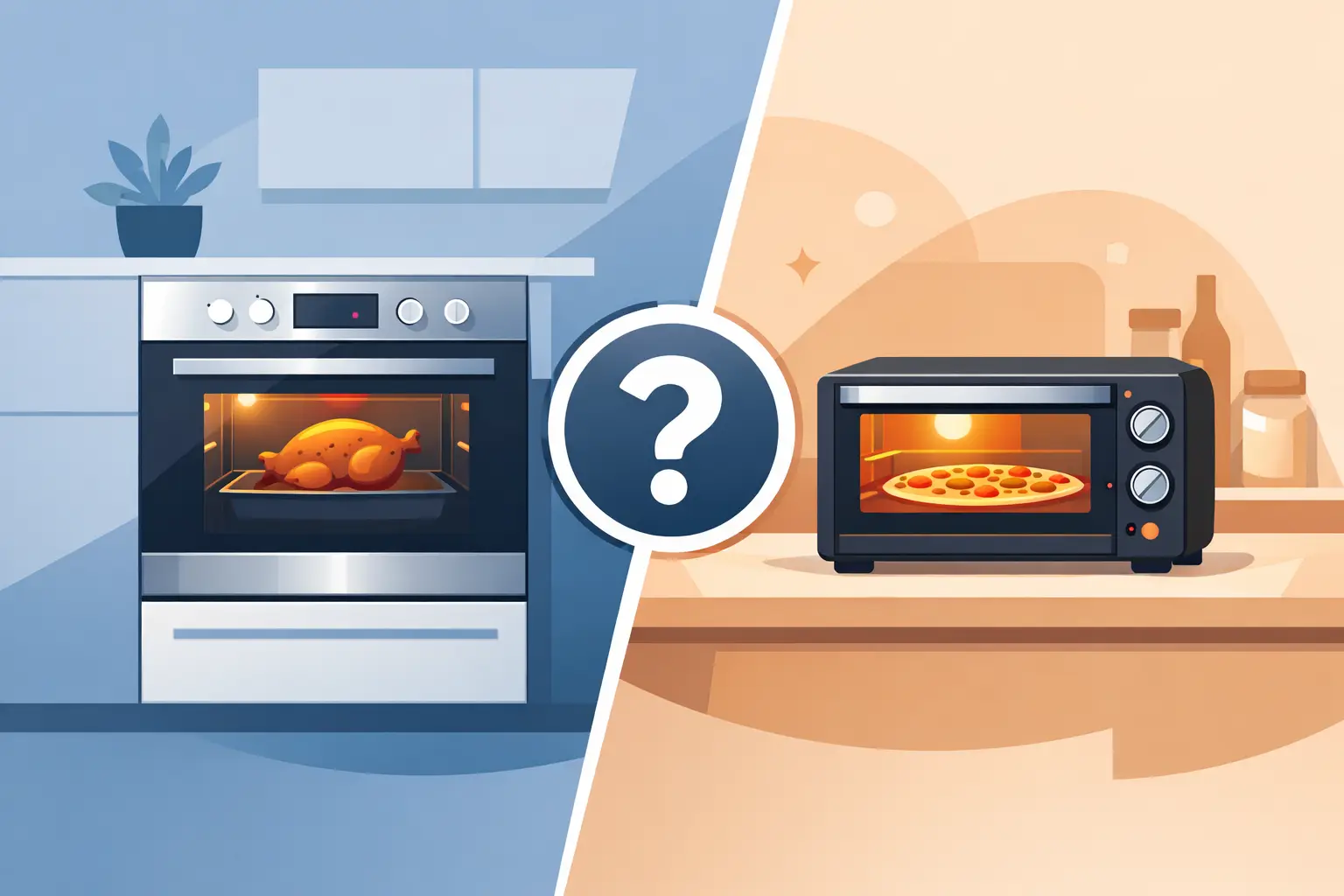
A crowded counter can change the way a kitchen feels before dinner even begins. When comparing a built in oven vs countertop oven, the right choice is not simply about which appliance cooks food well. It is about how your kitchen works on busy weeknights, when family gathers, and when you want every meal to feel easier to prepare.
A built-in oven creates a polished, integrated cooking zone with the capacity for larger meals. A countertop oven brings flexible cooking power to smaller spaces, rental homes, and kitchens that need a convenient second oven. Both can earn their place. The better fit depends on your space, cooking volume, budget, and long-term plans for the home.
Built-In Oven vs Countertop Oven at a Glance
| Consideration | Built-In Oven | Countertop Oven | | — | — | — | | Kitchen placement | Installed within cabinetry or a wall unit | Sits on a stable countertop | | Cooking capacity | Best for family meals, baking, and entertaining | Best for small portions and quick tasks | | Installation | Requires planned cabinetry and electrical setup | Usually plugs into an appropriate outlet | | Upfront cost | Higher appliance and installation investment | Generally lower purchase cost | | Kitchen appearance | Clean, integrated, and permanent | Flexible, but uses visible counter space | | Ideal user | Homeowners building or upgrading a kitchen | Small households, renters, and kitchens needing backup capacity |
The comparison becomes clearer when you look beyond the appliance itself. An oven should support your routine, protect your usable workspace, and help you cook with confidence rather than add another obstacle to the room.
When a Built-In Oven Is the Better Choice
A built-in oven is designed for the kitchen that cooks often and cooks for more than one or two people. Its larger cavity gives you room for a full roasting pan, multiple baking trays, or a family-sized casserole. If Sunday dinners, holiday entertaining, or batch cooking are part of your routine, that capacity quickly becomes a practical advantage.
Placement is another major benefit. A wall oven can be installed at a comfortable height, reducing the need to bend low when checking a roast or lifting a hot dish. This is especially valuable for households that cook frequently or want a safer, more comfortable workflow. Installed beneath a cooktop or within a tall cabinet, it can also create a unified kitchen layout where every zone has a clear purpose.
Built-in models typically offer more precise cooking control and a broader range of functions than compact countertop units. Features vary by model, but larger ovens may offer convection cooking, grilling or broiling modes, multiple rack positions, timers, and temperature settings suited to more demanding baking. That precision matters when you want evenly browned pastries, crisp roasted vegetables, or consistent results across several dishes.
The visual impact is just as meaningful. A properly planned built-in oven sits flush with surrounding cabinetry and can complement a modern kitchen through clean lines, coordinated finishes, and an intentional layout. For homeowners investing in a renovation, it is often part of a larger decision to create a kitchen that feels refined and works efficiently every day.
There are trade-offs. A built-in oven costs more upfront because the purchase may include cabinetry work, electrical preparation, delivery, and professional installation. It is not easily moved, either. If you rent, expect to relocate, or are working with a very small kitchen, that permanence may not make sense. Before choosing one, confirm the cabinet cutout dimensions, ventilation clearances, voltage requirements, and circuit capacity with a qualified installer.
Where a Countertop Oven Makes Everyday Cooking Easier
A countertop oven is often underestimated because of its size. For small meals, reheating, toasting, baking, and crisping leftovers, it can save time and avoid heating a full-size oven. It is a useful choice for a couple, a student apartment, a compact condo, or a secondary prep area where convenience matters most.
Its greatest strength is flexibility. There is no cabinetry project required, and many models can be moved when the kitchen layout changes. A countertop oven can also take pressure off the main oven during entertaining. While a built-in oven handles the roast or baked pasta, the countertop unit can warm rolls, cook appetizers, or finish a small dessert.
For households that rarely prepare large meals, a countertop oven may deliver the cooking performance they need at a lower initial cost. It is also a practical option during a kitchen remodel, when access to a main oven may be limited. The shorter warm-up time of many compact units can make it appealing for quick lunches and after-school snacks.
Still, countertop space is valuable real estate. A large unit can crowd the area needed for chopping, serving, or setting down groceries. It also needs clear space around it so heat can escape safely. Do not tuck it under low cabinets, place it near flammable materials, or run it through an overloaded extension cord. Follow the manufacturer’s clearance and electrical instructions, especially if the appliance will be used daily.
Capacity is the other limitation. Many countertop ovens accommodate only small pans, a few slices of toast, or a compact pizza. They may struggle with oversized cookware, multiple trays, and meals for a larger group. For a family that cooks substantial dinners most nights, relying on one as the primary oven can become frustrating.
Consider Your Cooking Pattern, Not Just Your Kitchen Size
The most useful question is not, “Which oven is better?” It is, “What do I need my oven to do most often?” A homeowner who bakes for family gatherings has different needs from someone who mainly reheats lunch and makes sheet-pan meals for two.
Choose a built-in oven when cooking is central to your household routine. It makes sense if you regularly prepare complete dinners, bake several items at once, host friends, or want an integrated kitchen that supports long-term living. It is also the stronger choice when you are already designing cabinets or replacing major appliances, since installation can be planned as part of the project.
Choose a countertop oven when speed, affordability, and adaptability matter more than maximum capacity. It is ideal for light daily cooking, limited square footage, and supplemental use. It can be particularly helpful in a busy household with a full-size oven already in place, giving you an extra cooking zone without a major renovation.
Some kitchens benefit from both. This is not excess for households that cook often. A built-in oven can take care of larger dishes while a countertop unit handles quick breakfasts, snacks, and side dishes. The result is less waiting, better use of kitchen space, and more freedom when several people are preparing food at once.
Look Beyond Purchase Price
A countertop oven is usually the more affordable way to add oven-style cooking, but value should be measured over time. Consider how often the appliance will run, how much food it can handle, and whether it will meet your needs a year or two from now. A low-cost appliance that feels too small for your routine may soon become an inconvenience rather than a solution.
A built-in oven represents a larger investment, yet it can add everyday usefulness and visual value to a well-designed kitchen. Its durable, permanent format suits homeowners who want a dependable cooking center for years of family meals and shared occasions. The key is selecting a model with functions you will genuinely use, rather than paying for features that do not fit your cooking style.
Energy use also depends on the task. Heating a compact countertop oven for a small portion may be more sensible than warming a large oven cavity. But when preparing several dishes or cooking for a group, a built-in oven’s capacity can be more efficient than running multiple small batches. Match the appliance to the volume of food, not just the recipe in front of you.
Plan for a Kitchen That Supports More Moments of Sharing
Whether you choose a built-in oven or a countertop model, prioritize safe placement, reliable temperature control, and a design that makes you want to cook. A well-chosen oven does more than heat food. It gives busy families more room to prepare, serve, and enjoy meals together.
The best choice is the one that turns your available space into a kitchen that feels capable every day – from a quick breakfast before work to a table full of food shared with the people you love.