
Cart 0

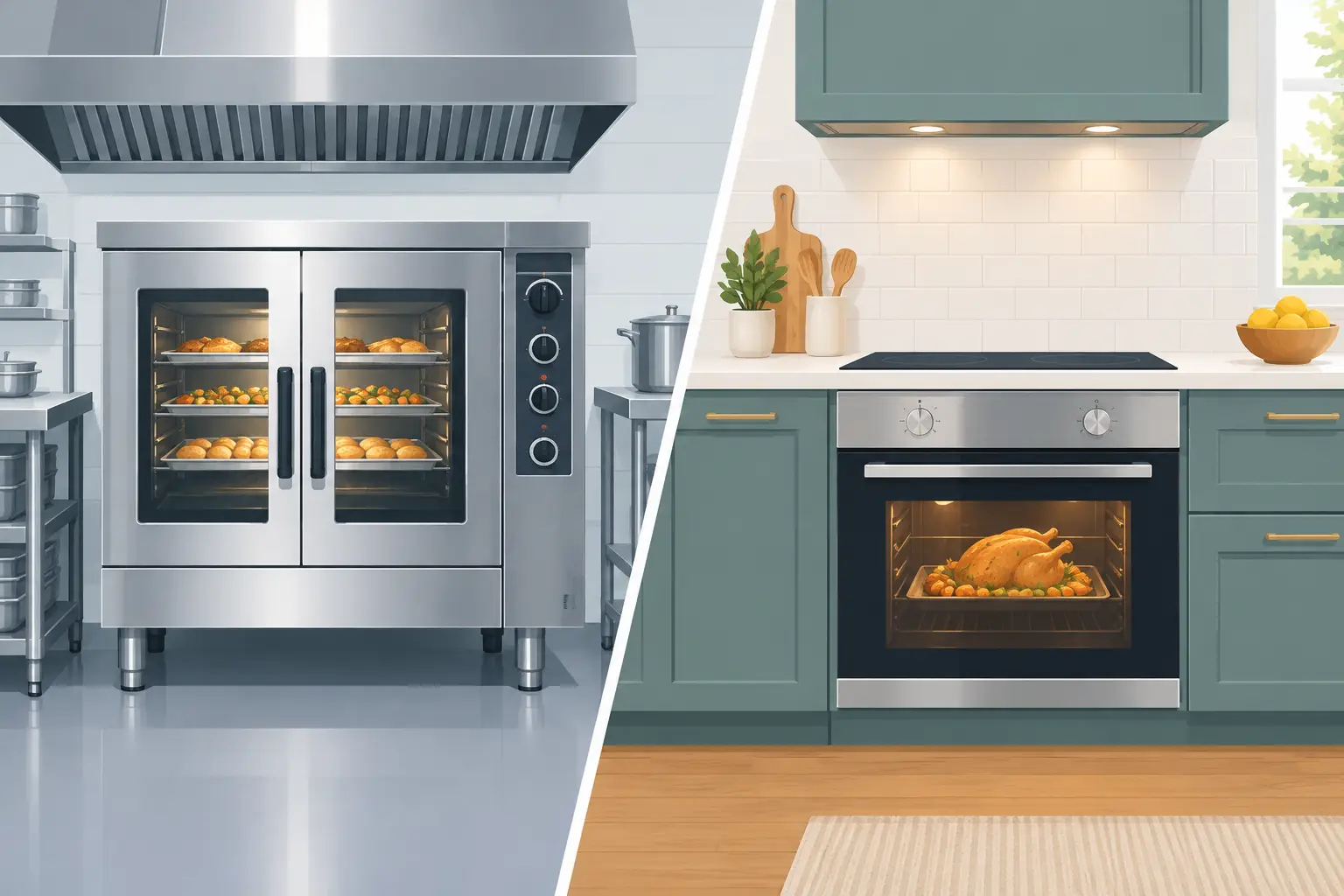
A dinner rush can expose the limits of an oven in minutes. Four trays waiting to bake, tickets continuing to print, and a door opening every few seconds create a very different demand from roasting chicken for Sunday family dinner. That is the real distinction in commercial versus residential ovens: not simply size or price, but the workload the appliance is built to carry.
The right oven should make cooking feel more controlled, whether you are preparing weeknight meals in a refined home kitchen or keeping a foodservice operation moving. A commercial model can be a smart business tool, while a residential oven can bring impressive precision, safety, and style to everyday cooking. The best choice depends on how often you cook, how much you cook at once, and what your kitchen can realistically support.
Commercial Versus Residential Ovens: The Core Difference
Residential ovens are designed around household patterns. They are made for regular meal preparation, baking, entertaining, and family gatherings, with controls and features that support convenience without overwhelming the kitchen. Most homeowners need reliable preheating, even heat, manageable capacity, and an attractive appliance that fits naturally into the room.
Commercial ovens are designed for sustained output. In a restaurant, bakery, café, catering kitchen, or high-volume canteen, the oven may run for much of the day. It must recover temperature quickly after the door opens, accommodate multiple pans, and continue performing through repeated cooking cycles. Its construction, power requirements, ventilation needs, and operating costs reflect that heavier responsibility.
Neither category is automatically better. Installing a commercial oven in a home can mean paying for capacity and infrastructure you may never use. Relying on a residential oven for a busy restaurant can slow service, affect consistency, and shorten the appliance’s working life.
Capacity Is More Than Interior Space
A larger oven cavity is one of the most visible advantages of commercial equipment. Commercial ovens may accept full-size sheet pans, several racks, or large hotel pans, allowing teams to prepare greater quantities in one cycle. This matters when every batch needs to be ready at the same time.
For a household, capacity should match the way you host and cook. A family that regularly prepares multiple dishes, bakes for celebrations, or enjoys weekend entertaining may benefit from a larger residential oven or a configuration with more than one cooking compartment. But a very large cavity is not always the most efficient answer for smaller meals. Heating unused space can mean longer preheat times and unnecessary energy use.
Consider the food you make, not just the number of people at the table. A home baker may need rack flexibility and steady heat more than restaurant-scale volume. A pizza operation may need a specialized deck oven rather than a general-purpose convection model. Capacity only creates value when it fits the menu and the rhythm of the kitchen.
Speed and Heat Recovery Change the Workflow
Commercial ovens generally heat quickly and recover temperature faster after loading or checking food. This is essential when cooks are opening the door repeatedly during service. Fast recovery helps preserve browning, baking results, and production timing from one batch to the next.
Residential ovens have become highly capable, especially models with convection settings, accurate temperature controls, and thoughtful insulation. For a household, the difference between a standard and rapid preheat may be meaningful because it gets dinner on the table sooner. Still, residential appliances are not typically intended to handle constant door openings and back-to-back full loads for hours at a time.
Convection is worth considering in both settings. A fan circulates hot air to encourage more even cooking and can reduce cooking times for many foods. Yet it is not a universal setting. Delicate cakes, soufflés, and certain custards may benefit from gentler, still heat. Good cooking results come from matching the oven mode to the recipe, not using maximum airflow for everything.
Build Quality and Daily Durability
A commercial oven is usually engineered with heavier-duty components, stronger hinges, durable rack supports, and surfaces intended for frequent cleaning. It is built around the expectation that several people may use it across multiple shifts. That durability is a major reason commercial equipment carries a higher upfront investment.
Residential ovens are built for a different, still demanding role. They should stand up to daily family cooking, holiday gatherings, and years of regular use while remaining approachable and comfortable to operate. Features such as easy-clean interiors, cool-touch doors, clear controls, and dependable safety systems often matter as much as raw output.
Durability should be judged alongside serviceability. A commercial kitchen needs equipment that can be maintained quickly because downtime can stop revenue. At home, dependable after-sales support and practical warranty coverage provide confidence that the oven will remain part of the kitchen for years. VEES approaches kitchen equipment with this balance in mind: performance should support the people cooking, not create another problem to manage.
Installation, Ventilation, and Utilities
This is where many buying decisions become more complex. Commercial ovens may require higher electrical capacity, a gas connection, specialized clearances, fire-safety provisions, and mechanical ventilation. Local codes can also govern what is permitted in a foodservice setting. These requirements protect staff, customers, and the business, but they add planning time and installation expense.
Most residential ovens are easier to integrate into a home kitchen, although proper electrical supply, ventilation, and cabinet clearances still matter. A powerful oven paired with insufficient ventilation can leave lingering heat, grease, and odors in the home. The oven, cooktop, and range hood should be considered as one cooking system.
Before choosing either type, confirm the available utility connections and measure more than the appliance opening. Account for door swing, ventilation paths, service access, and the space needed to safely move hot pans. An oven that technically fits but restricts movement can make a beautiful kitchen frustrating to use.
Energy Use and the True Cost of Ownership
Commercial ovens often consume more energy because they are larger, hotter, and used longer. That does not make them inefficient in every situation. When an operation needs to produce hundreds of portions, cooking more food per cycle can improve output and reduce labor pressure. The meaningful question is cost per useful batch, not only the energy figure on a specification sheet.
For homeowners, a well-sized residential oven is usually the more sensible long-term choice. It can deliver the control needed for everyday meals without the utility demands and installation requirements of commercial equipment. Energy-conscious habits help too: avoid excessive preheating, use the right cookware, keep door openings brief, and cook multiple items together when temperatures align.
Factor in maintenance, cleaning products, replacement parts, ventilation, and labor as well as purchase price. A low-cost oven that causes uneven baking or repeated delays can become expensive in a professional kitchen. A feature-heavy unit that rarely suits your actual meals may be poor value at home.
Choosing the Right Oven for Your Kitchen
A residential oven is usually the right fit if you are equipping a home, even one where cooking is a serious passion. Look for dependable temperature performance, practical capacity, safety features, easy cleaning, and a design that complements the rest of the kitchen. Families who cook often will appreciate an appliance that keeps everyday preparation efficient while making room for memorable meals and moments of sharing.
A commercial oven is the stronger choice when your kitchen earns its keep through volume. Restaurants, bakeries, catering businesses, and institutional kitchens need equipment selected around menu demands, peak-hour output, staff workflow, and compliance requirements. It is wise to plan for growth, but not to buy far beyond realistic production needs.
If your needs sit between the two, define your busiest hour first. Count the pans, portions, and cooking tasks that must happen at once. That simple exercise often makes the decision clearer than comparing features alone. Choose the oven that lets your kitchen work with confidence today, while leaving enough room for the meals, business, and gatherings you want to create next.