
Cart 0

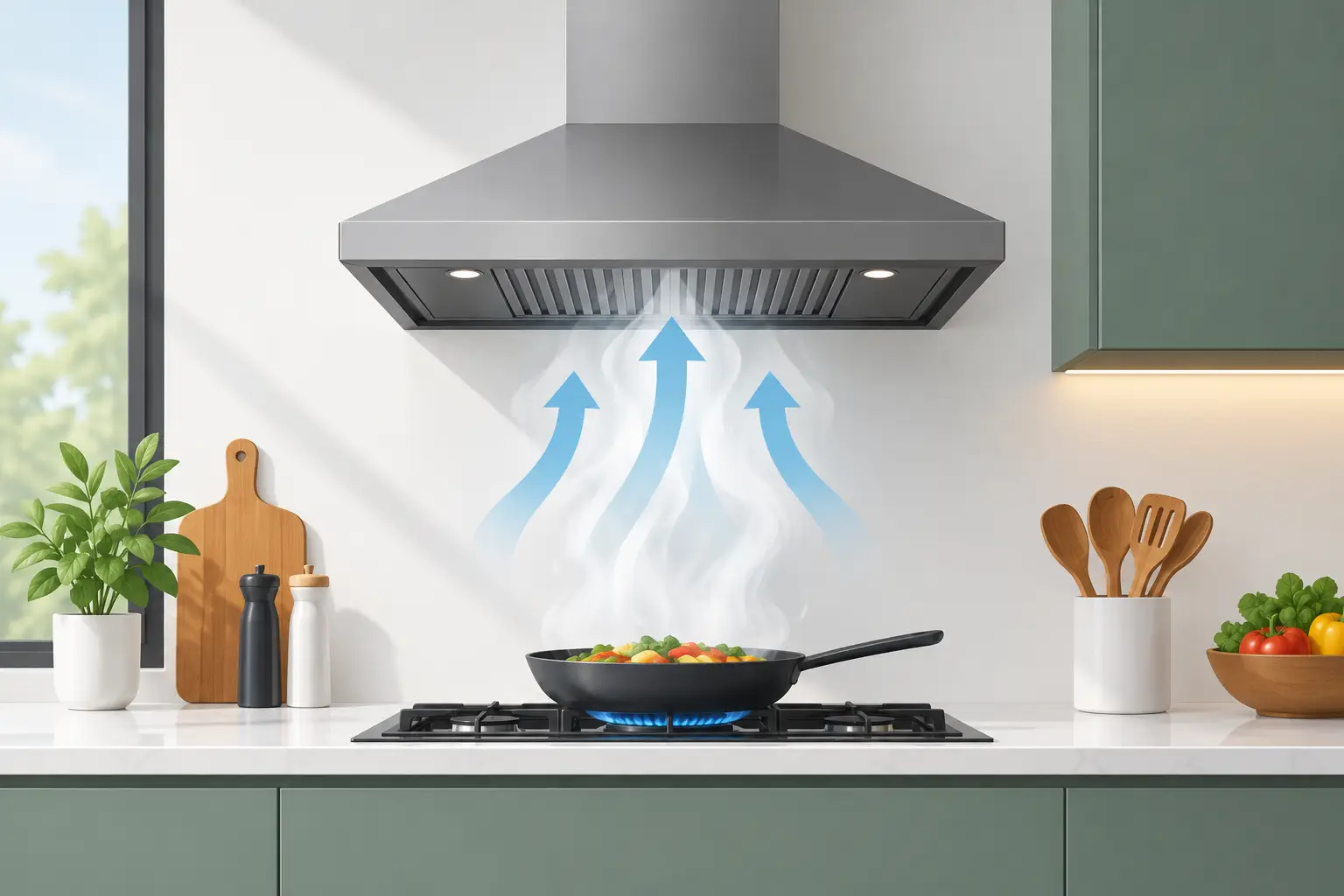
A range hood earns its place when a family stir-fry stays in the kitchen, not in the curtains, bedrooms, and next morning’s coffee. This range hood suction review focuses on what people actually notice while cooking: how quickly smoke clears, whether grease settles on nearby cabinets, how much noise the fan makes, and whether the hood keeps up when several burners are working at once.
Suction is not just a number on a product label. It is the combined result of airflow, installation, hood size, filters, cooking style, and the path air takes out of the home. Choosing well means creating a cleaner, more comfortable space for everyday meals, weekend gatherings, and serious cooking sessions.
What Good Range Hood Suction Feels Like
Strong suction does not need an introduction. You see it when steam rises toward the hood instead of spreading across the ceiling. You smell it when seared fish, garlic, and frying oil fade quickly after cooking. You feel it when the kitchen remains comfortable enough for conversation while dinner is underway.
The best result is capture at the source. A hood should pull fumes, heat, moisture, and airborne grease upward before they drift beyond the cooktop. This matters even more with high-heat gas cooking, deep frying, grilling, wok cooking, and meals prepared on multiple burners. These methods produce more smoke and grease than simmering soup or warming leftovers.
For homes with open kitchens, effective extraction protects the atmosphere of the whole living area. For restaurants and busy foodservice kitchens, it supports a more controlled workspace, helps reduce grease buildup, and allows the team to stay focused during peak service.
Range Hood Suction Review: Start With Airflow
Airflow is commonly measured in cubic feet per minute, or CFM. A higher CFM rating can move more air, but it is not an automatic guarantee of better real-life performance. An oversized fan installed with poor ducting can lose much of its advantage. Conversely, a properly fitted hood with appropriate airflow can perform impressively for everyday cooking.
As a practical starting point, light electric cooking may be comfortable with moderate airflow. Frequent gas cooking, intensive sautéing, or homes where aromatic dishes are prepared often usually benefit from higher capacity. Commercial kitchens need a separate level of planning, based on cooking equipment, menu volume, heat output, and local ventilation requirements.
Do not choose only by the highest number. Higher airflow can mean more sound, greater power use, and a need for a wider duct. The right balance depends on how you cook. A household that cooks one-pan meals a few nights a week has different needs from a family preparing several dishes daily or a chef running high-output equipment.
Ducted extraction delivers the strongest results
A ducted hood sends contaminated air outdoors. When installation allows it, this is usually the most effective option for clearing heat, humidity, smoke, and cooking odors. It is especially worthwhile for frequent high-heat cooking and gas hobs.
The duct route matters as much as the hood. Short, straight duct runs preserve airflow. Long runs, narrow ducts, and multiple sharp bends add resistance, making even a powerful hood work harder. If a hood is rated for a larger duct diameter, reducing that diameter can noticeably affect suction and noise.
Recirculating hoods have a clear role
A recirculating hood pulls air through grease filters and, where fitted, carbon filters before returning it to the room. It can be a practical solution for apartments, renovations, or layouts where external ducting is not possible.
The trade-off is straightforward: recirculation can reduce grease and some odors, but it does not remove heat and moisture from the home as effectively as ducted extraction. Carbon filters also need regular replacement. For low- to moderate-intensity cooking, this can be a sensible compromise. For heavy frying or frequent wok cooking, ducted ventilation is typically the better long-term choice.
Size and Coverage Matter More Than Many Buyers Expect
A hood should be at least as wide as the cooktop. For better capture, especially over gas burners or powerful commercial equipment, a hood that extends beyond the cooktop width offers a useful advantage. Smoke does not rise in a perfectly narrow column. It rolls and spreads, particularly when a pan is near the front burner.
Depth is equally important. A shallow hood may look sleek but can struggle to capture steam from front burners. Canopy-style hoods often offer stronger coverage because they project farther over the cooking area. Integrated and slim models can suit compact, minimalist kitchens, but their dimensions should match the way the kitchen is used.
Mounting height also changes performance. Install a hood too high and rising fumes have time to spread. Install it too low and it can obstruct movement or fall outside recommended safety clearances. Always follow the hood and cooktop installation guidance, particularly where gas appliances are involved.
Filters Keep Suction Working Over Time
A new hood can seem powerful on day one, then gradually lose effectiveness when maintenance is ignored. Grease filters are the first line of defense. They collect airborne oil before it reaches the motor and ductwork, helping preserve performance and making cleanup easier.
Metal mesh and baffle filters are common choices. Mesh filters can be effective for residential use and should be cleaned regularly. Baffle filters are often preferred for heavier cooking because their design handles grease efficiently and is well suited to demanding environments. The best choice depends on the hood design and expected workload.
Cleaning frequency should follow cooking habits, not the calendar alone. A household that fries often may need to clean filters monthly or more. A lightly used kitchen may need less frequent care. If airflow seems weaker, surfaces feel sticky, or the hood sounds strained, inspect the filters before assuming the motor is the problem.
For recirculating models, carbon filters require replacement rather than washing. A saturated carbon filter cannot effectively manage odors. Keeping this small maintenance task on schedule makes a meaningful difference to the comfort of the kitchen.
Noise Is Part of the Suction Experience
Powerful extraction should support the cooking experience, not overwhelm it. Every fan creates sound, but installation and operation determine how noticeable it feels. Fan speed, motor quality, duct size, duct length, and bends all influence noise.
A useful feature is multiple speed control. Lower settings can handle gentle simmering with less noise, while higher settings are ready for searing, frying, or several active burners. Using the highest setting only when needed helps balance comfort with performance.
Listen for more than volume. Rattling, vibration, or an abrupt whine may signal an installation issue, a loose filter, or restricted airflow. A well-installed hood should feel stable and purposeful, even when working hard.
How to Test Suction Before and After Purchase
In a showroom, inspect the hood’s coverage area, controls, filter access, and construction. Ask how it is designed to be installed, whether it supports ducted or recirculating operation, and what duct size it requires. A beautiful finish matters, but it should not distract from the details that determine daily performance.
After installation, test the hood during real cooking. Bring a pan to high heat on the front burner and watch where steam travels. Try multiple burners when preparing a larger meal. Notice whether odors linger after cooking and whether the fan clears the air without excessive vibration.
Avoid judging suction with a tissue held against the filter. That simple demonstration can show that the fan is running, but it does not reveal how well the hood captures heat, grease, and smoke from a pan. Real cooking conditions are the better measure.
Choosing for Home and Commercial Kitchens
For a family kitchen, the ideal range hood supports easier daily meals and more enjoyable moments of sharing. Look for coverage that matches the cooktop, airflow appropriate to your cooking style, accessible filters, practical speed settings, and a design that complements the room.
For a restaurant or professional kitchen, durability and consistency move to the front of the decision. Equipment must withstand long hours, frequent cleaning, intense heat, and continuous demand. Proper ventilation planning is essential, not optional, and should be coordinated with the cooking line and applicable local requirements.
VEES approaches kitchen performance with the understanding that appliances should make cooking feel more efficient, refined, and dependable. The most suitable hood is not necessarily the loudest or the highest-rated model. It is the one sized, installed, and maintained to handle the meals you actually prepare.
When you can cook a lively family dinner, clear the air quickly, and sit down without carrying the smell of the kitchen with you, your range hood is doing far more than moving air. It is making room for the moments that happen after the cooking is done.