
Cart 0

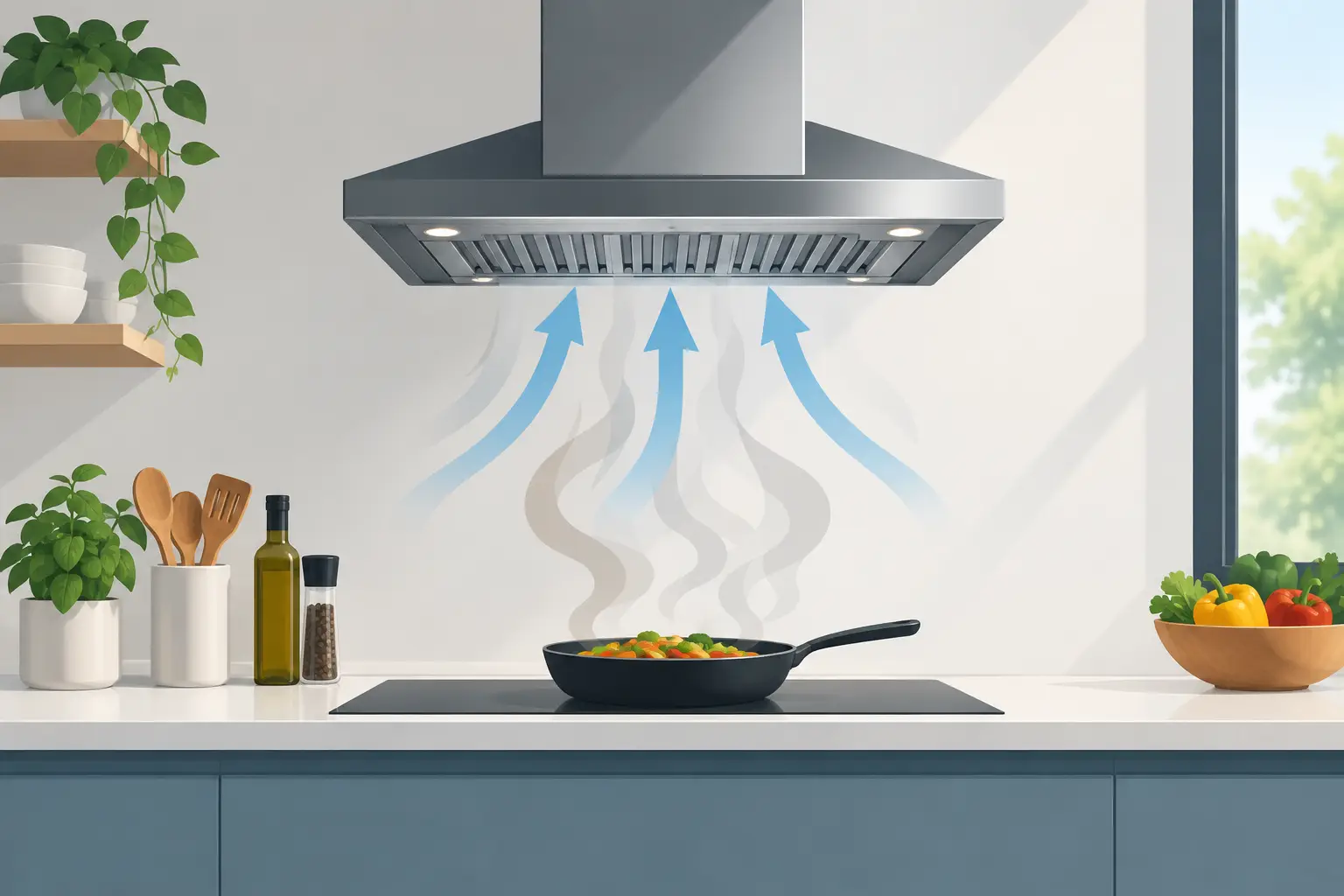
A pan of garlic shrimp can make the whole house smell inviting at dinner and stubborn by bedtime. So, can hoods remove odors? Yes, a well-chosen, properly used range hood can greatly reduce cooking smells, along with smoke, grease, and steam. But it does not erase odors by magic. Its results depend on how it captures the cooking plume, where the air goes, and how well the hood is maintained.
For family kitchens and busy foodservice spaces alike, the goal is not simply a quieter room after cooking. It is cleaner air, less grease settling on cabinets, and a kitchen that feels ready for the next moment of sharing.
Can Hoods Remove Odors From Cooking?
Range hoods remove odors most effectively when they pull air in at the source, before vapors have time to spread across the room. When food hits a hot wok, griddle, or frying pan, it releases a rising mix of moisture, grease particles, heat, and odor-causing gases. A hood creates airflow that draws much of that plume into its filters and ventilation path.
That distinction matters. A hood does not neutralize every smell already floating through the home. It works best as a first line of defense while you cook. Turn it on after the kitchen is smoky, and much of the odor may already have reached upholstery, curtains, or nearby rooms.
Odor control also varies by what is on the menu. Simmered soup and boiled pasta create mostly steam, while searing steak, deep-frying, grilling, and cooking with aromatic spices create stronger grease and odor loads. High-heat cooking needs stronger capture, not merely a louder fan.
Ducted Hoods Deliver the Strongest Odor Control
A ducted range hood vents air outside through ductwork. This is generally the most effective setup for removing cooking odors because it physically carries contaminated air out of the kitchen rather than returning it to the room. It is especially valuable for households that cook frequently, use high heat, or prefer bold flavors, as well as commercial kitchens handling continuous service.
Performance depends on the full ventilation route. Short, smooth, correctly sized duct runs allow air to move more freely than long runs with several turns. A powerful blower can lose much of its advantage if the duct is restricted, undersized, or poorly installed. The exterior vent should also open freely and be kept clear.
For homes, a ducted hood is often the best long-term choice when the kitchen layout allows it. It helps protect finishes and supports a fresher open-plan living area. For professional kitchens, ventilation requirements can be more demanding and may be governed by local building, fire, and health codes. Equipment should be selected and installed for the cooking load, not just for its appearance.
Recirculating Hoods Can Help, With Limits
A ductless or recirculating hood pulls air through grease filters and, in many models, activated carbon filters before releasing it back into the kitchen. It can be a practical solution for apartments, island installations, or spaces where exterior ducting is not possible.
The grease filter captures airborne oil droplets. The carbon filter adsorbs some odor molecules. Together, they can make a noticeable difference during light-to-moderate cooking, especially when filters are fresh and the hood is used consistently.
Still, recirculating hoods do not remove heat, humidity, or all odor-causing gases from the room. They are less effective for repeated deep-frying, powerful stir-frying, or heavy commercial-style cooking. Think of a recirculating model as odor reduction, not complete odor extraction. If cooking smells remain a regular frustration, upgrading to a ducted system may be the more satisfying investment.
The Right Hood Must Match the Cooktop
A range hood can have impressive specifications and still underperform if it does not cover the cooking surface. The hood should be at least as wide as the cooktop. For high-heat gas cooking or wide pans, extra coverage can improve capture because heat and vapors do not always rise in a perfectly straight line.
Mounting height matters too. A hood placed too high gives smoke and odor more room to escape around it. One placed too low can interfere with cooking and may not meet installation guidance. Follow the manufacturer’s stated clearance requirements for the hood and the type of cooking appliance below it.
Airflow capacity, commonly expressed in CFM, should suit how you cook and the hood design. More airflow can help with intense cooking, but bigger is not always better. Excessive airflow may create more noise, draw conditioned air out of the home, or require makeup air measures in tightly built houses. The best choice balances effective capture, comfortable sound levels, and the realities of the installation.
A well-designed hood canopy and a sufficiently deep capture area can sometimes matter as much as raw fan power. This is why selecting a range hood should be about the complete kitchen solution – cooktop, hood dimensions, installation, and daily cooking habits.
Small Habits That Make a Major Difference
The most effective odor-control habit is simple: switch on the hood before heat reaches the pan. Starting early creates airflow before the first burst of smoke, steam, and aroma rises. Use a setting that matches the task, then let the fan run for several minutes after cooking to clear lingering vapors.
Keep the front burners in mind. They are farther from the wall and can be harder for a wall-mounted hood to capture, particularly with tall pots or vigorous frying. When practical, use back burners for the smokiest jobs, keep pan handles safely positioned, and avoid placing large lids or trays where they block airflow.
Opening a nearby window can help in some kitchens, but it can also create cross-drafts that push the cooking plume away from the hood. If odors seem to travel sideways instead of upward, reduce strong drafts and check whether the fan setting and hood coverage are sufficient.
Clean Filters Are Essential, Not Optional
A hood cannot move air effectively through a filter coated in grease. Over time, buildup restricts airflow, holds cooking odors, and can make the kitchen feel stale even when the fan is running. For many home kitchens, metal grease filters should be cleaned regularly based on cooking frequency. Heavy frying or daily cooking calls for more frequent attention.
Many removable metal filters can be washed according to the manufacturer’s instructions. Let them dry completely before reinstalling them. Do not assume carbon filters can be washed and reused. Most need periodic replacement, and delaying that replacement is one of the main reasons a recirculating hood loses its odor-control performance.
Also wipe the hood’s underside, fan intake area, and surrounding surfaces. Grease film can retain odor long after the meal is gone. In a commercial environment, establish a scheduled cleaning program and use qualified service professionals where required.
When a Hood Is Running but Odors Stay Behind
Persistent smells do not always mean the hood has failed. First, check the filters. Next, confirm that the hood is operating at an appropriate speed and that the exterior damper opens when a ducted model runs. Weak airflow, unusual vibration, or a change in sound can point to a blocked duct, a worn component, or an installation issue that deserves professional inspection.
Some odors have sources beyond cooking vapors. Food scraps in the garbage disposal, residue in a drip tray, old grease on backsplash surfaces, and damp cleaning cloths can all create a lingering kitchen smell. Addressing those sources alongside ventilation gives the room a much fresher result.
When planning a new kitchen, choose ventilation early rather than treating it as a final decorative detail. A modern hood should complement the room, but it should also give confident support when the family is frying, simmering, baking, and gathering around food. VEES kitchen solutions are designed around that balance of performance, safety, and refined everyday living.
The right hood lets the aroma of dinner welcome people to the table, without asking it to stay long after the plates are cleared.