
Cart 0

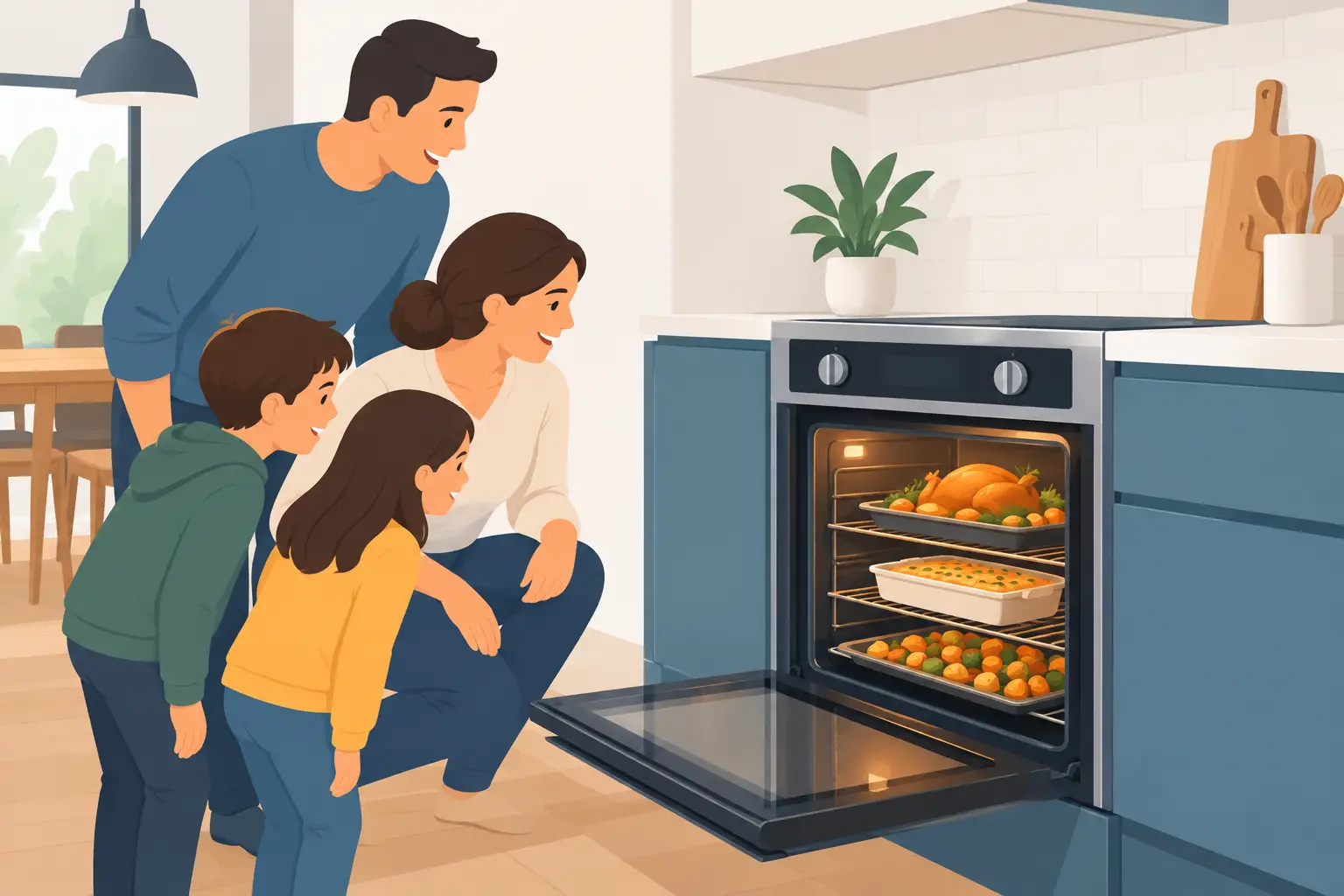
A weeknight oven works hard in a very different way from an oven used only for the occasional tray of cookies. It may need to roast chicken and vegetables at the same time, bake two pizzas for hungry teenagers, or handle a holiday spread without forcing every dish into a waiting line. If you are asking what size oven for family cooking, the right answer is less about the number of people in your home and more about how you cook for them.
For most households, oven capacity, usable rack space, cooking frequency, and kitchen layout should all guide the decision. A well-chosen oven makes everyday meals easier to organize and creates more room for the moments worth sharing around the table.
What Size Oven for a Family Is Usually Right?
For a family of three to five, a standard single wall oven or range oven with around 4.5 to 5.5 cubic feet of capacity is often the practical sweet spot. This size generally gives you room for a roasting pan, a full sheet pan, or two dishes placed on separate racks. It suits households that cook dinner regularly, bake on weekends, and host small gatherings from time to time.
Larger families, frequent entertainers, and enthusiastic home cooks may be happier with 5.5 to 6.5 cubic feet or more. The additional capacity can make a noticeable difference when you are preparing a larger roast, baking several trays, or cooking side dishes alongside the main meal. It is not only about fitting more food inside. It is about reducing the number of cooking rounds and serving everything at the right temperature.
A compact oven below 4.5 cubic feet can still suit a couple or a small household with limited kitchen space. But for a growing family, it can quickly feel restrictive when dinner involves more than one dish. Before choosing a smaller model, consider whether it can fit the pans and bakeware you use most often.
Capacity Is Only One Part of the Decision
Cubic feet are a useful starting point, but they do not tell the whole story. Two ovens with similar stated capacities can offer very different usable space. Interior shape, rack positions, door design, and the placement of heating elements all affect what you can cook at once.
Look closely at the oven cavity. Can it hold a full-size sheet pan comfortably? Is there enough vertical clearance for a tall casserole or a whole turkey? Can two racks be used without dishes blocking airflow? These details matter more than an extra fraction of a cubic foot on a specification sheet.
For family cooking, flexible rack placement is especially valuable. You may only need one rack for a quick pasta bake on Monday, then need three positions for cookies, roasted vegetables, and warming bread on Saturday. An oven that adapts to both makes the kitchen feel more capable every day.
Think About Your Most Demanding Meal
A simple way to choose oven size is to picture the meal that puts the most pressure on your current kitchen. For some families, that is Thanksgiving dinner. For others, it is a Sunday lunch with grandparents, a birthday party, or pizza night with several children and friends.
If your typical high-demand meal includes one large roasting pan and two side dishes, a standard 5-cubic-foot oven may be enough. If you regularly need multiple trays, a large roast, and dessert in the oven at the same time, prioritize a larger cavity or consider a double oven.
Buying for your busiest realistic use is sensible. Buying solely for a once-a-year event may not be. A very large oven uses more kitchen space and may cost more, so it should serve your normal routine as well as your celebrations.
Single Oven or Double Oven for Family Cooking?
A single large oven is a strong choice for many families. It offers generous room for everyday cooking, keeps the appliance layout simple, and can be easier to fit into a standard kitchen design. If you usually cook one meal at a time and entertain occasionally, one spacious oven with reliable temperature control can do nearly everything you need.
A double oven becomes compelling when different dishes need different temperatures. You can roast chicken in one compartment while baking a dessert or keeping side dishes warm in the other. This separation also helps during holidays, when timing is often the biggest challenge rather than total capacity.
The trade-off is that double ovens require more cabinet space or a larger range configuration. Their individual cavities can also be smaller than one large single oven, depending on the design. A family that frequently cooks large roasts should confirm that the larger compartment fits its preferred cookware before deciding.
For households that cook often, the best choice is usually the one that removes friction from real routines. A single oven favors simplicity and large-pan capacity. A double oven favors flexibility, organization, and smoother hosting.
Match the Oven to the Way Your Family Eats
Family size offers a helpful baseline, but eating habits are often the better predictor. A family of four that cooks nearly every night needs more oven capability than a family of six that mainly uses the stovetop, microwave, or takeout.
Choose a larger oven if you regularly batch-cook meals, bake bread or desserts, prepare freezer-friendly dishes, or host relatives and friends. More capacity also supports households with teenagers, where one dinner can require the quantity of food once reserved for a gathering.
If your meals are usually quick and simple, focus on convenience rather than maximum volume. Features such as even heat distribution, easy-to-clean surfaces, clear controls, and a responsive preheat function can make a standard-capacity oven feel far more useful. Reliable performance matters when dinner needs to be ready between work, school, and evening activities.
Convection cooking is worth considering for busy family kitchens. A fan circulates heat to support more even cooking across multiple racks, which can be helpful for baking trays of vegetables, cookies, or appetizers. Results still depend on the recipe and rack placement, but convection can improve efficiency when the oven is fully loaded.
Measure Your Kitchen Before You Fall in Love With Capacity
An oven should enhance the kitchen, not overwhelm it. Before choosing a model, measure the available cabinet opening, surrounding countertop clearance, electrical or gas requirements, and the path from delivery entrance to installation point. For a replacement appliance, do not assume the new unit will match the old cutout exactly.
Also consider door clearance. A wide oven door needs room to open safely without obstructing an island, walkway, or adjacent cabinet. If young children are part of the household, a layout that keeps hot doors away from high-traffic paths is a meaningful safety advantage.
Built-in wall ovens can create a refined, integrated look and place the cooking cavity at a more comfortable height. Range ovens combine cooktop and oven functions in one footprint, making them a practical choice where space is limited. The right format depends on your kitchen plan, but both can deliver excellent family capacity when chosen thoughtfully.
Features That Make a Family Oven Feel Bigger
The best oven is not always the one with the largest cavity. Several thoughtful features can help you get more from the space you have.
A telescopic or easy-glide rack makes it safer to check heavy roasting pans. Multiple rack positions allow you to arrange dishes around their cooking needs. Interior lighting helps you monitor food without opening the door and losing heat. A large window and clear display keep everyday cooking more manageable, especially when several dishes are in progress.
Temperature consistency deserves equal attention. An oven that holds heat reliably helps chicken cook through, cakes rise evenly, and casseroles brown as expected. It also gives you confidence when preparing meals for people you care about. Durable materials, secure door seals, and well-designed controls support that consistency over years of regular use.
At VEES, the focus is on kitchen solutions that bring together practical performance, safety, and modern design. For a family kitchen, that combination turns an appliance purchase into something more useful: dependable support for daily meals and more relaxed moments of sharing.
A Practical Family Oven Size Guide
For one or two people, up to 4.5 cubic feet may be sufficient if kitchen space is tight and entertaining is rare. For a household of three to five, 4.5 to 5.5 cubic feet is usually the most versatile range. For five or more people, frequent hosts, or committed bakers, 5.5 cubic feet and above offers welcome breathing room.
If two temperatures are regularly needed at once, a double oven may offer more value than simply choosing the biggest single cavity. And if your family is changing – perhaps children are growing, parents are moving in, or entertaining is becoming more frequent – it is wise to choose a little more capacity than you need today.
The right oven size should make dinner feel less like a scheduling problem. Choose one that fits your cookware, your kitchen, and the meals your family genuinely enjoys, then let it make room for more good food and more time together.