
Cart 0

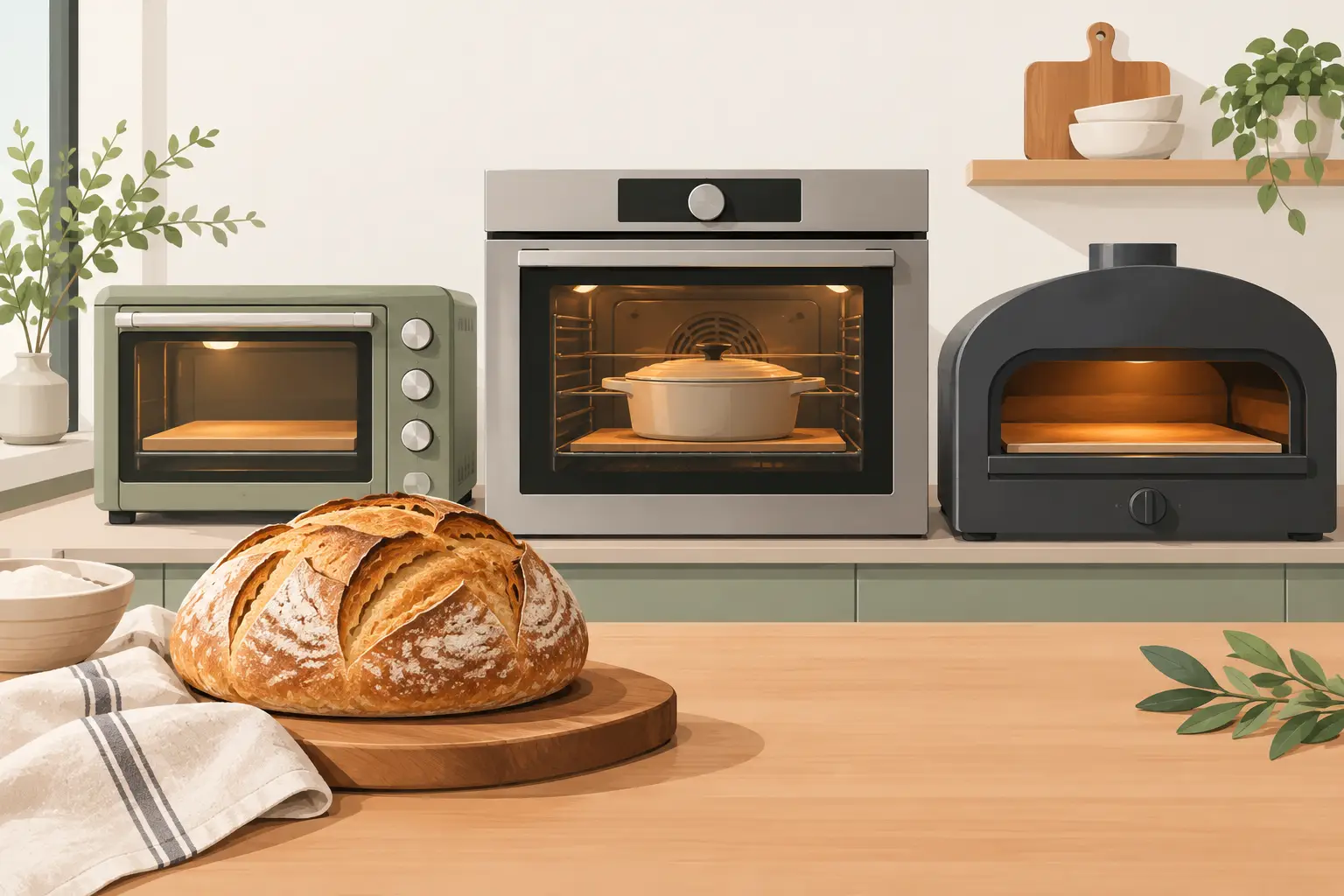
A beautifully blistered boule does not begin with a recipe alone. It begins with heat that arrives fast, stays steady, and gives dough the powerful first rise that creates an open crumb and crackling crust. The best ovens for artisan bread are not always the largest or most expensive. They are the ovens that give home bakers confident control over temperature, steam, and baking space – turning a weekend loaf into a moment worth sharing.
For families who bake often, food enthusiasts refining their sourdough, or small food businesses producing bread in meaningful volume, the right oven makes every batch more consistent. Here is what separates an everyday oven from one that can truly support artisan-style bread.
What Artisan Bread Needs From an Oven
Artisan bread places more demands on an oven than cookies, casseroles, or quick weeknight meals. A lean sourdough or country loaf needs a strong burst of heat at the start of baking. This creates oven spring: the final expansion that gives bread height, structure, and an airy interior.
It also benefits from steam during the first part of the bake. Steam keeps the surface of the dough flexible long enough for expansion, then helps form the deep, glossy crust associated with bakery-style loaves. Once the loaf has risen fully, dry heat finishes the crust and develops rich color.
That is why an oven’s stated maximum temperature is only one part of the decision. Reliable temperature control, effective heat retention, even airflow, and enough space for a Dutch oven or baking stone matter just as much. A refined kitchen should support both everyday convenience and those slower, satisfying recipes that bring everyone to the table.
Best Ovens for Artisan Bread: Features That Matter
High, Stable Baking Temperatures
Most artisan loaves bake well between 425°F and 500°F. Look for an oven that reaches at least 450°F and holds that setting without major swings. Stable heat helps prevent pale bottoms, weak oven spring, and uneven browning.
A higher maximum setting can be useful for pizza and flatbreads, too, but do not choose solely on the biggest number. An oven that claims intense heat but recovers slowly after the door opens can be less dependable than one with well-designed heating elements and consistent calibration.
For a home baker, a full-size built-in electric oven or freestanding range oven is often the most practical choice. It provides the room needed to preheat a heavy Dutch oven, baking steel, or stone properly. In a commercial setting, higher-capacity deck-style or convection equipment may be the better investment, especially when several loaves must be baked throughout the day.
Even Heat From Top to Bottom
A great loaf should not be dark on one side and blond on the other. Even heat distribution is essential, particularly when baking free-form loaves directly on a stone or steel.
Conventional bake settings can be excellent for bread because the still air supports gentle, even expansion. Many modern ovens also offer fan-assisted convection. Convection improves browning and can shorten baking time, but it may dry the dough surface too quickly if used aggressively at the start.
The most flexible option is an oven that gives you both modes. Begin with conventional heat for the covered or steamed portion of the bake, then use a light convection setting later if you want a crisper, more evenly colored crust. The best setting depends on the loaf, the pan, and how your particular oven performs.
Space for a Dutch Oven or Baking Surface
Before choosing an oven, think about what will actually go inside it. A standard Dutch oven used for sourdough can be wide, tall, and heavy. A baking stone or steel also needs room around it so hot air can circulate.
Check the interior capacity rather than relying only on external dimensions. You should be able to place a covered Dutch oven on the center rack without it touching the walls or heating elements. If you bake bâtards, larger boules, or two loaves at once, wider racks and multiple shelf positions quickly become valuable.
A roomy cavity also makes preheating safer and easier. There is less risk of brushing your hands against hot walls while loading dough onto a stone or removing a lid after the steaming stage.
Steam Options That Fit Your Routine
True steam injection is a valuable feature for serious bread production, but it is not essential for every household. A Dutch oven is one of the most effective ways to create a humid baking environment around a single loaf. The lid traps moisture released by the dough, delivering impressive crust development without specialized equipment.
If you prefer baking several loaves at once, an oven with a dedicated steam function may be worth considering. It gives greater capacity and repeatability, particularly for frequent bakers and small-scale food operations. Be sure the steam system is designed for baking use and is simple to clean, since mineral buildup can affect long-term performance.
For standard ovens, a preheated tray used carefully with hot water can add steam, but it requires attention and carries a burn risk. A covered vessel remains the easiest, safest approach for most home bakers.
A Door and Window That Support Better Results
Bread baking rewards patience. Every unnecessary door opening releases heat and steam, which can reduce oven spring and extend recovery time. A clear, well-lit viewing window helps you monitor color without interrupting the bake.
A solid, well-sealed door is equally useful. Good insulation supports stable temperatures, improves energy efficiency, and keeps the exterior more comfortable around busy family kitchens. Safety-focused details such as cool-touch door construction, secure handles, and responsive controls matter when children, guests, or team members are moving through the space.
Choosing the Right Oven for Your Baking Style
There is no single best choice for every baker. The right oven should fit how often you bake, how much bread you produce, and what else happens in your kitchen.
For the Home Sourdough Baker
Choose a dependable full-size electric oven with accurate temperature controls, a generous interior, multiple rack positions, and the option to switch between conventional and convection cooking. Pair it with a Dutch oven, baking stone, or steel, and you have a versatile setup for sourdough, sandwich loaves, roasted dinners, and family gatherings.
An electric oven is often favored for its dry, predictable heat. Gas ovens can produce excellent bread as well, but they may have more moisture in the baking chamber and can show stronger heat from below. If you use gas, a baking stone or steel can help moderate bottom heat and improve consistency.
For Families Who Bake and Cook Every Day
Look beyond bread-specific features. An oven should make life easier across breakfast, weekday dinners, celebration meals, and baking projects. Easy-clean surfaces, intuitive controls, reliable timers, and a modern design all add value because the appliance will be used for far more than one loaf.
A thoughtfully designed oven from a kitchen solutions brand such as VEES can complement this kind of routine, where performance and presentation belong together. The goal is not to turn every meal into a technical project. It is to have dependable heat available when you want to create something memorable.
For Small Food Businesses and Serious Volume
If your operation produces bread for customers, capacity and recovery time become more important than convenience features alone. Consider commercial-grade equipment with durable racks, strong insulation, dependable service support, and the ability to bake multiple loaves consistently across long days.
Convection ovens can be productive for rolls, enriched breads, and tray bakes. For rustic hearth loaves, however, evaluate whether the airflow is adjustable and whether the oven can provide sufficient humidity. A deck oven or a commercial unit with controlled steam may deliver more traditional results, but it requires more space, budget, and operational training.
Common Mistakes When Shopping for a Bread Oven
The first mistake is buying based only on appearance. A sleek oven can elevate a kitchen, but interior dimensions, heating performance, and control accuracy determine whether it supports your baking ambitions.
The second is assuming convection is automatically better. It is useful, especially for even browning and multiple trays, but a strong fan can set the crust too early. Choose an oven with flexible modes rather than one that forces you into fan cooking for every bake.
The third is overlooking preheating. Even the finest oven cannot deliver bakery-style results if a stone, steel, or Dutch oven has not had time to absorb heat. Plan for 30 to 45 minutes of preheating for heavy bakeware, depending on the oven and temperature.
Finally, do not expect an oven to correct every dough issue. Fermentation, shaping, scoring, and hydration still influence the finished loaf. The oven gives you the consistent heat environment needed to repeat good technique with greater confidence.
Make the Most of Your Oven From the First Loaf
Once your oven is installed, test it before relying on it for an important bake. Use an oven thermometer to compare the displayed temperature with the actual chamber temperature. Notice whether the rear, front, or lower rack browns more quickly. These small observations help you adjust rack placement and timing with purpose.
For a reliable first artisan loaf, preheat a Dutch oven at 450°F, bake the shaped dough covered for about 20 minutes, then remove the lid and continue until the crust is deeply browned. Let the loaf cool fully before slicing. That wait can be difficult, but it allows the crumb to set and preserves the texture you worked for.
The right oven does more than bake bread. It gives you a reliable place to practice, gather, and create the familiar aroma that makes a kitchen feel like the center of home.