
Cart 0

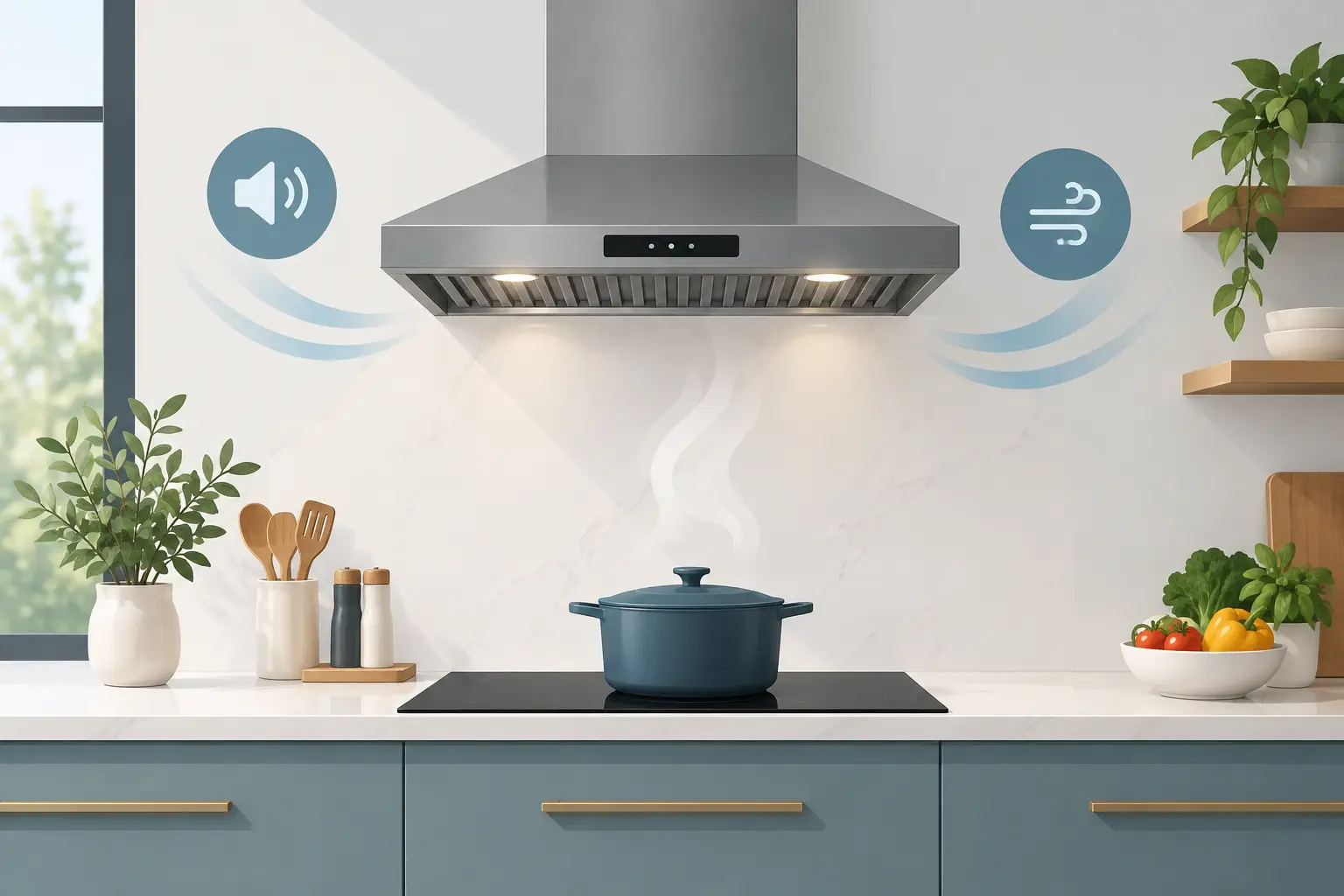
A range hood should clear the air after a sizzling stir-fry, not overpower the conversation at the table. In a quiet range hood review, the best model is rarely the one with the lowest noise claim alone. It is the hood that captures smoke and grease effectively at the speeds you use most, fits your cooktop and kitchen layout, and still lets family meals and everyday moments of sharing feel relaxed.
For homeowners who cook often, quieter ventilation is a practical upgrade. For food enthusiasts and commercial operators, it can also support a more focused, comfortable workflow. The right choice comes down to understanding what creates noise, what actually improves capture, and where a little extra power is worth the trade-off.
What makes a range hood genuinely quiet?
Range hood sound is commonly measured in sones. Lower sones mean lower perceived noise: around 1 sone is often compared to a quiet refrigerator, while 4 sones is closer to normal conversation. These comparisons are useful, but they do not tell the full story.
A hood may advertise a very low sone rating at its lowest fan setting, then become noticeably loud at the high speed needed for searing, frying, or wok cooking. Look for sound information across more than one speed whenever it is available. The most meaningful number is the sound level at the setting you expect to use for everyday cooking.
Motor design matters, but so do airflow paths, fan balance, housing construction, and installation quality. Air moving through a narrow duct, a long run with several turns, or a poorly fitted damper can create turbulence and vibration. A well-designed hood can sound more refined because it moves air efficiently rather than forcing it through restrictions.
Quiet range hood review: noise needs airflow
It is tempting to choose the quietest model on paper, especially in an open-plan kitchen. But a hood that is too weak for your cooking style can create its own problem: you may run it at maximum speed every time you cook. That is when noise rises and smoke may still escape into the room.
Airflow is usually measured in cubic feet per minute, or CFM. A moderate-flow hood can be a sensible choice for light simmering and occasional cooking. Households that regularly grill indoors, pan-fry, use high-heat burners, or prepare aromatic dishes generally need stronger capture performance. The goal is not simply high CFM. It is enough controlled airflow to collect steam, grease, and odors before they spread.
For a typical home kitchen, a range hood with multiple useful speed settings offers more flexibility than one that is merely powerful. Lower speeds can handle daily simmering quietly. A higher setting can be reserved for intense cooking, then reduced once the smoke has cleared. This approach keeps the kitchen more comfortable without compromising cleanliness.
Commercial kitchens have different demands. Restaurant operators should prioritize durable motors, effective grease management, compatible ductwork, and local ventilation requirements before focusing on sound alone. A quieter working environment is valuable, but safety and sustained performance must lead the decision.
Ducted or ductless: the choice that changes the result
A ducted range hood sends cooking air outdoors. When installation allows it, this is typically the stronger option for removing heat, moisture, grease, and persistent food odors. It can also support quieter operation because the hood does not need to rely entirely on recirculating air through filters.
Ductless, or recirculating, hoods are useful where exterior venting is not possible. They use grease filters and carbon filters to return filtered air to the room. They can improve the cooking environment, but they do not remove heat and moisture in the same way as a ducted system. Carbon filters also require regular replacement to remain effective.
Neither choice is automatically right for every kitchen. A compact apartment may need a ductless solution, while a larger family kitchen may benefit greatly from ducted ventilation. Before purchasing, confirm what your building, cabinetry, and local codes allow. A quiet hood cannot perform at its best if the installation approach does not suit the space.
Size and coverage are more important than they look
A range hood should cover the cooking surface well. At a minimum, match the width of the cooktop. If space permits, a hood that is slightly wider can improve capture, particularly with powerful burners at the outer edges of the range.
Depth matters as much as width. A shallow hood may look clean and minimal, yet it can struggle to capture steam from front burners. This does not mean every kitchen needs an oversized canopy. It means the hood should be selected for the way heat and smoke rise from your specific cooking area.
Mounting height also affects both performance and noise perception. If the hood is mounted too high, it has to work harder to collect rising smoke. If it is too low, it can interfere with cookware, sightlines, or comfortable movement. Follow the manufacturer’s recommended height range and account for the requirements of gas, electric, or induction cooking equipment.
Filters, lighting, and controls shape everyday satisfaction
Quiet operation is easier to appreciate when cleaning and controls do not become a chore. Reusable stainless steel baffle or mesh filters can capture grease effectively, but they need routine washing. Dishwasher-safe filters are convenient for busy households, while commercial environments may require more frequent cleaning based on cooking volume.
Good lighting is another detail that changes the cooking experience. Bright, evenly placed LED lights improve visibility when checking a sauce, browning protein, or preparing a family dinner after work. They also use less energy and typically last longer than older bulb styles.
For controls, simple is often better. Responsive push buttons, touch controls, or a remote option can all work well if the speeds are clearly marked and easy to reach. A timer or delayed shutoff is especially practical. It lets the hood continue clearing lingering odors for a few minutes after cooking, without leaving the fan running all evening.
Installation can make or break a quiet hood
Even an excellent range hood can become louder than expected after a poor installation. Flexible ducting, undersized ducts, loose panels, sharp turns, and improperly secured components can all increase noise. Where possible, use the duct size recommended by the manufacturer and keep the route direct.
Professional installation is often worthwhile, especially for ducted models, island hoods, and higher-output systems. An installer can verify electrical connections, mounting strength, exterior vent placement, and backdraft protection. For gas cooking or major ventilation changes, confirm local building and safety requirements before work begins.
This is also the time to consider the broader kitchen design. A hood should complement cabinetry and appliances, but visual elegance should not come at the expense of effective capture. Modern kitchen solutions work best when performance and design are planned together, a principle reflected in VEES appliances built for convenient, refined cooking spaces.
Which quiet range hood is right for your kitchen?
For an apartment kitchen with lighter cooking, a compact hood with low-speed sound performance, reliable lighting, and easy-to-clean filters may be the smartest investment. If recirculation is necessary, factor replacement carbon filters into ongoing ownership costs.
For an active family kitchen, prioritize a ducted model with a width that matches or exceeds the cooktop, several fan speeds, and enough airflow for frequent frying and high-heat meals. You want a fan that remains pleasantly quiet for everyday use, with extra strength available when the menu calls for it.
For serious home cooks, the key is capture area and real-world performance. Look beyond a single low sone number. Consider the hood depth, mounting height, duct route, and how it sounds at medium and high settings. A slightly more audible hood that removes smoke quickly may feel quieter overall than a weak unit that must run at full power for longer.
For professional foodservice, start with the cooking equipment, volume, local regulations, and cleaning routine. The best solution is a ventilation system that protects staff comfort while managing heat, grease, and odors through demanding service periods.
A quieter kitchen is not about making cooking silent. It is about giving the sounds that matter more room: a pan warming on the stove, a favorite song in the background, and the people gathered nearby. Choose a range hood that clears the air with confidence, then let the kitchen stay where good food and good company belong.