
Cart 0

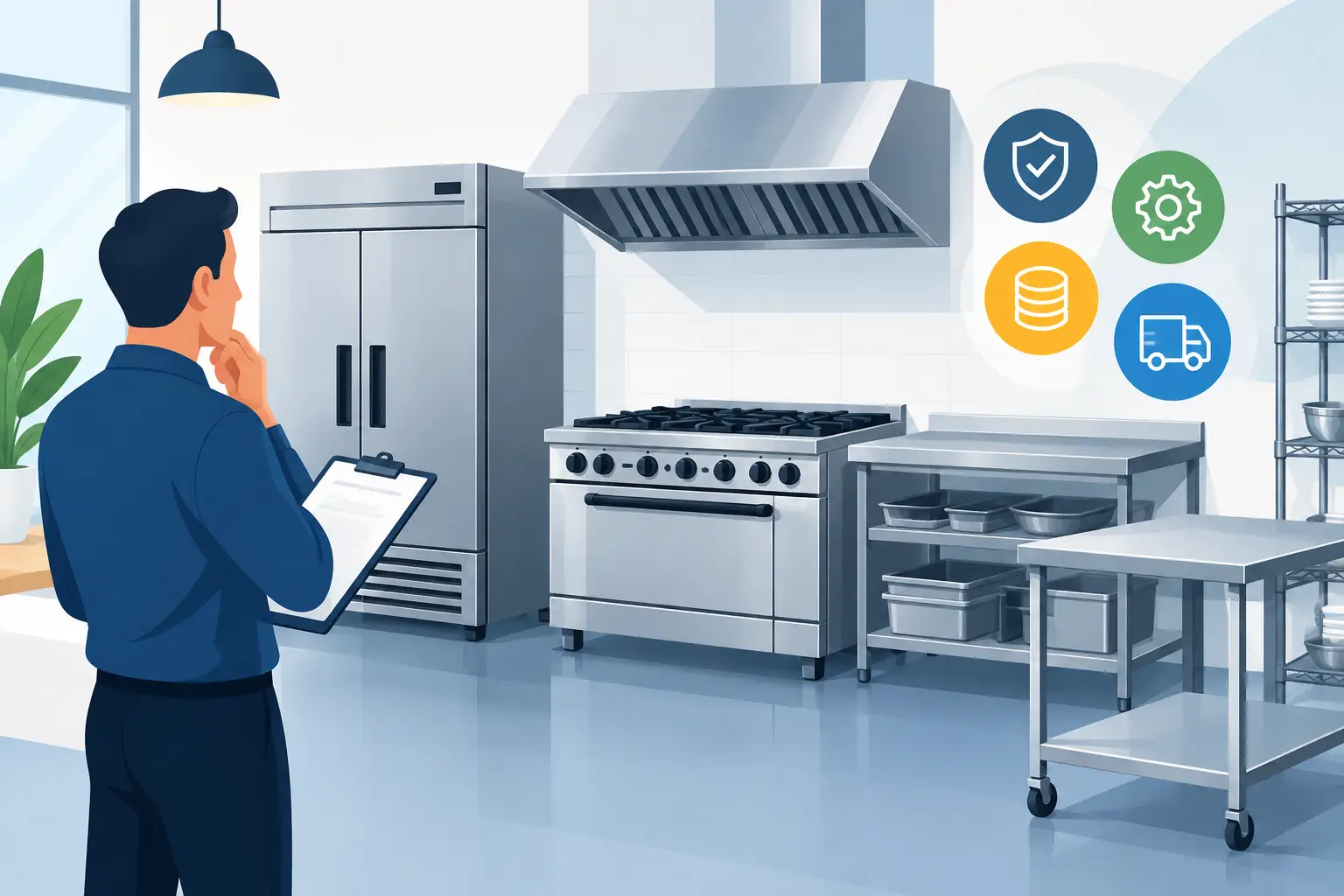
A restaurant kitchen rarely struggles because it lacks equipment. It struggles because the equipment does not match the menu, the pace of service, or the people using it. This restaurant equipment purchasing guide helps operators make confident choices that support faster cooking, safer workspaces, consistent food quality, and a kitchen built to perform through every busy shift.
The goal is not to fill every available inch with stainless steel. It is to create a practical cooking environment where each appliance earns its place, supports your team, and contributes to a better guest experience.
Start With the Menu, Not the Product Catalog
A new combi oven, high-output range, or powerful hood may look impressive on paper. But the right purchase begins with a more direct question: what does your kitchen need to produce, at peak volume, every day?
Review your menu item by item. Identify which dishes require boiling, frying, grilling, baking, holding, reheating, or high-heat sautéing. Then look at how many orders must move through each station during your busiest 15 to 30 minutes. A breakfast café, a noodle shop, a steakhouse, and a bakery may all need ovens and cooktops, but their capacity requirements are entirely different.
Your equipment should serve the menu you plan to run now, with reasonable room for growth. Buying too small can slow service and strain equipment. Buying far beyond your actual needs can consume capital, increase utility costs, and take up valuable workspace.
Calculate for Peak Service, Not Average Sales
Average daily covers can be misleading. A restaurant may serve 120 guests in one day, but if 70 arrive during a two-hour lunch rush, that rush determines the capacity your cooking line needs.
Consider portion sizes, batch sizes, cooking times, and recovery time between orders. For example, a fryer that handles a steady trickle of orders may not recover temperature quickly enough for a surge of fried appetizers. Likewise, an oven with generous interior space may still become a bottleneck if it cannot deliver the temperatures, rack configuration, or cooking speed your menu requires.
Ask chefs and station leads for input before finalizing a specification. They understand where delays happen and which tools make service more controlled.
Restaurant Equipment Purchasing Guide: Plan the Workflow
A high-performing kitchen is a sequence, not a collection of appliances. Ingredients should move logically from receiving and storage to prep, cooking, plating, service, and cleaning. When the layout forces staff to cross paths, carry hot pans too far, or reach around one another, speed and safety both suffer.
Begin by mapping the key work zones: cold storage, preparation, hot cooking, pass or plating, warewashing, and dry storage. Put the equipment used together within practical reach. A prep counter needs appropriate refrigeration nearby. A fryer station needs landing space for baskets and finished food. Ovens and cookers need clear access without interrupting traffic near the pass.
Ventilation is part of this planning, not an afterthought. Gas hobs, ranges, fryers, and other heat-producing appliances may require properly sized exhaust hoods, makeup air, fire suppression, and local code approval. A beautiful cooking line is of little value if its hood system cannot manage heat, grease, and smoke during a full service.
Leave Room for People, Cleaning, and Maintenance
Measure the room, doorways, delivery routes, and access points before placing an order. Confirm that large equipment can be delivered and installed without removing doors, walls, or fixtures. Also account for clearance around appliances for cleaning, ventilation, and service access.
Tight layouts can look efficient until a technician needs to reach the back of an oven or a team member needs to safely drain and clean a fryer. The best layout protects both daily productivity and the long-term condition of your investment.
Choose Commercial Durability Where It Counts
Commercial equipment is built for repeated use, but not every commercial-grade product is the same. Look beyond polished surfaces and headline features. Examine the construction, control design, components, hinges, seals, burners, grates, and surfaces your team will handle every day.
Stainless steel is a familiar choice for good reason: it is durable, easy to clean, and suited to demanding kitchens. Yet the grade and thickness of materials, the quality of welds, and the design of seams all affect how equipment performs over time. Smooth, accessible surfaces reduce cleaning effort and limit places where grease and food debris can collect.
For cooking appliances, prioritize dependable heat control. Precise flame adjustment on a gas hob, responsive electric heating, even oven performance, and stable temperatures all influence consistency. These details help chefs produce the same result during a quiet prep period and a crowded Saturday night.
Safety features deserve equal attention. Depending on the appliance, look for flame-failure protection, stable pan supports, insulated handles, clear controls, temperature safeguards, and designs that reduce accidental spills or contact with hot surfaces. Safety protects your team, your operation, and the confidence guests place in your restaurant.
Compare the Full Cost, Not Just the Purchase Price
The lowest quote is not always the most economical decision. Restaurant equipment has a cost long after delivery day, including energy use, water consumption, cleaning time, maintenance, repairs, replacement parts, and downtime.
An efficient oven or cooker may cost more upfront but help reduce operating expenses over years of use. A well-designed range hood can improve comfort at the line and support a cleaner kitchen environment. Reliable equipment can also protect revenue by reducing the risk of service interruptions when demand is high.
Before committing, compare these practical factors:
- Expected daily operating hours and energy requirements
- Warranty coverage, service response, and parts availability
- Cleaning procedures and the time required between shifts
- Installation needs, including gas, electrical, plumbing, and ventilation work
- The realistic service life of the appliance under your projected volume
There is no single right answer between gas and electric cooking equipment. Gas offers visible, immediate flame control that many chefs prefer, while electric cooking can provide a refined appearance, easy-to-clean surfaces, and consistent performance for specific applications. The better choice depends on your menu, available utilities, ventilation plan, local requirements, and the cooking style of your team.
Buy for Consistency, Then Add Specialty Pieces
Core equipment should make up the foundation of the budget. Invest first in the appliances and work surfaces that support the majority of your sales: cooking ranges or hobs, ovens, refrigeration, ventilation, prep space, and warewashing. These are the systems your kitchen cannot afford to lose.
Specialty equipment can be valuable when it directly supports a profitable menu category or solves a proven bottleneck. A dedicated cooker, high-capacity oven, or purpose-built appliance may improve speed and consistency for a signature dish. However, specialty purchases should follow operational evidence, not a passing trend.
A useful test is simple: if this appliance were unavailable during a busy service, would the kitchen lose meaningful sales, compromise quality, or slow the entire line? If the answer is no, consider whether the purchase can wait.
Verify Details Before You Place the Order
The final review should involve more than the buyer. Include the chef, kitchen manager, installer, electrician or gas contractor, and anyone responsible for maintenance. Confirm model dimensions, utility connections, electrical load, gas type, hood compatibility, required clearances, and local health and fire regulations.
Ask how the equipment will be serviced and whether replacement parts are readily available. Train the team on correct operation from the first day. Misuse, poor cleaning habits, and skipped maintenance can shorten the life of even the best-built appliance.
For operators choosing modern cooking solutions, VEES reflects the value of pairing dependable performance with thoughtful design – equipment should help teams work with greater ease while keeping the kitchen polished, efficient, and ready for moments of sharing.
The strongest equipment decision is the one your team barely has to think about during service. It simply heats accurately, cleans easily, supports safe movement, and lets every plate leave the kitchen with the consistency your guests remember.