
Cart 0

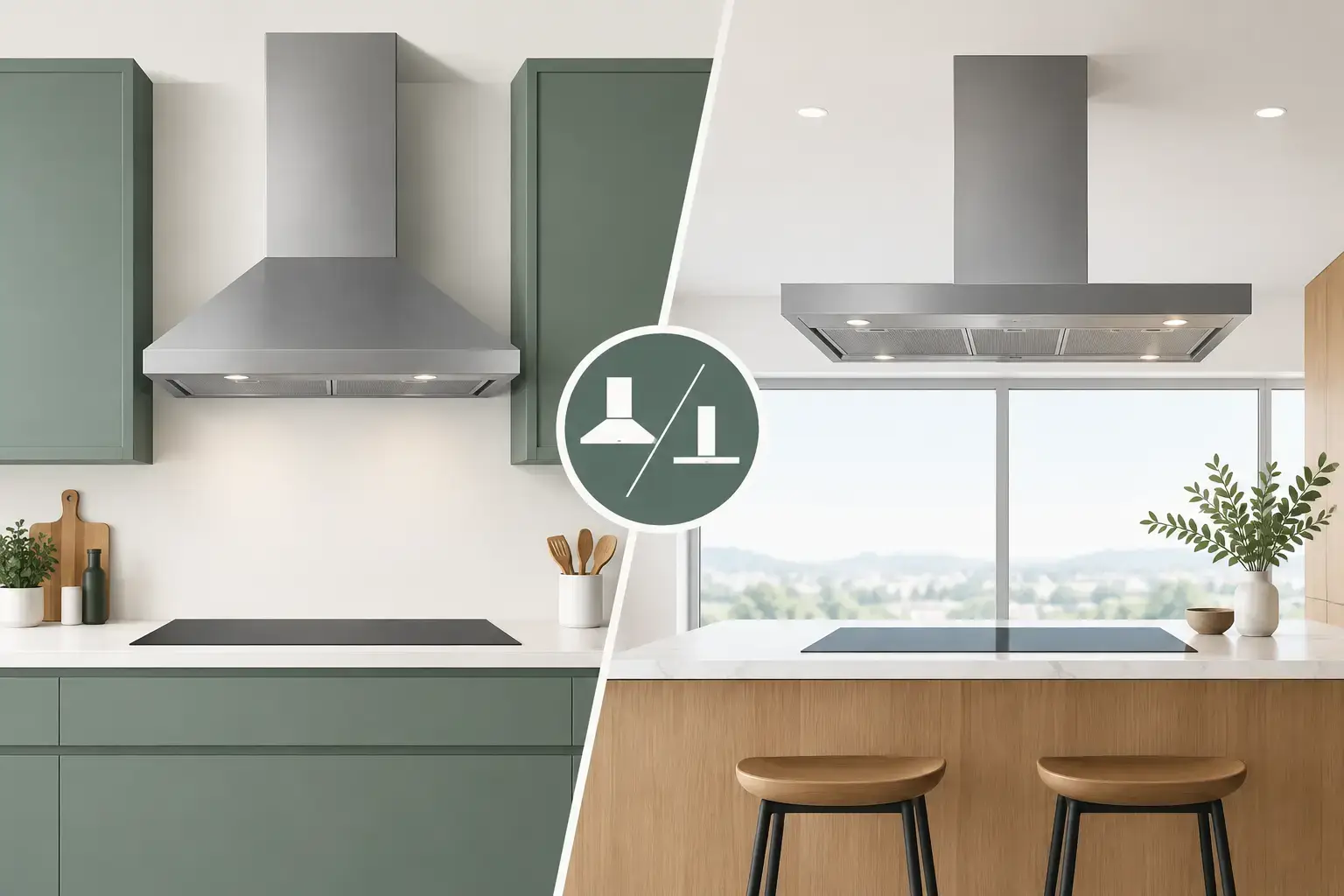
A range hood can quietly determine whether a kitchen feels fresh after dinner or holds onto the scent of frying, spices, and smoke long after the meal is served. The wall hood versus island hood decision is not simply about appearance. It affects ventilation performance, kitchen layout, installation planning, and the way your cooking space supports everyday moments of sharing.
For a hardworking family kitchen, the right hood keeps the room more comfortable while protecting nearby cabinets and finishes from grease and moisture. For a serious home cook or foodservice operation, it also helps create a cleaner, more focused environment around the cooktop. The best choice comes down to where you cook, what you cook, and how your kitchen is built.
Wall Hood Versus Island Hood: The Essential Difference
A wall hood is installed against a wall, directly above a cooktop or range. Because the wall sits behind it, the hood can use that surface to help contain and direct rising steam, heat, and cooking fumes toward the filters and ductwork. Wall-mounted chimney hoods are a popular choice in modern kitchens because they create a strong vertical focal point without taking up visual space in the center of the room.
An island hood is suspended from the ceiling over a cooktop placed on a freestanding island. It is visible from every side, making it both a ventilation appliance and a design feature. This placement is ideal for open-plan kitchens where the island is the social center, whether family members are gathering for breakfast or guests are talking while dinner comes together.
Neither configuration is automatically better. A wall hood usually has an advantage in capture efficiency because it is supported by a wall. An island hood offers greater layout freedom and a more open, welcoming cooking zone, but it needs thoughtful sizing and airflow planning to perform at its best.
Ventilation Performance Starts With Capture
A range hood does more than remove smoke. It is designed to capture airborne grease, steam, odors, and combustion byproducts before they spread across the kitchen. This is why hood placement, width, height, and blower strength matter as much as the exterior finish.
Wall hoods typically capture fumes efficiently because they sit close to the wall and cover the rear edge of the cooking surface. The wall helps limit the movement of rising air, so a properly sized wall hood can often deliver strong results with less airflow than a comparable island installation. This can be especially helpful for kitchens with a high-output gas range, frequent stir-frying, grilling, or pan-searing.
Island hoods work in a more exposed location. Air can move around all four sides of the cooktop, and cross-breezes from doors, windows, air conditioning, or nearby seating can shift smoke away from the hood. For that reason, an island hood commonly needs to be wider than the cooktop and may require greater airflow capacity than a wall hood serving the same range.
Do not select a hood based on airflow numbers alone. A powerful blower cannot fully compensate for a hood that is too narrow, installed too high, or paired with poorly planned ductwork. Capture area and installation quality are central to dependable ventilation.
Ducted or Recirculating?
Whenever the kitchen layout allows it, a ducted hood is generally the stronger choice. It moves cooking air outside rather than filtering it and returning it to the room. This makes a meaningful difference for households that cook often, use gas, or enjoy recipes with bold aromas and high heat.
A recirculating hood can be practical when exterior ducting is not possible, such as in certain apartments, renovations, or island locations with structural limits. These systems use grease filters and, often, carbon filters to reduce odors. They require regular filter maintenance and may not manage heat and humidity as effectively as ducted ventilation. For light cooking, they can be a sensible solution. For intensive cooking, plan for the most effective venting option your space can support.
Design and Layout: What Your Kitchen Needs
Choose a wall hood when the cooktop is naturally positioned along a perimeter wall. This setup keeps the island free for prep, serving, homework, and relaxed conversation. It can also simplify cabinetry and ceiling design, since the duct route may be shorter and more direct.
A wall hood suits a wide range of styles. A sleek stainless-steel chimney hood complements a contemporary kitchen, while an integrated hood concealed in a custom surround can create a softer, more architectural look. The hood can blend in or become a confident focal point, depending on the finish and proportions you choose.
Choose an island hood when the island is genuinely the best place to cook. For many homeowners, an island cooktop makes meal preparation more connected. You can face the room, speak with family or guests, and move easily between the refrigerator, sink, and prep area. In a commercial demonstration kitchen or open culinary space, it can also support a more engaging workflow.
The trade-off is visual and physical. An island hood hangs in open sight, so it must look balanced from every angle. It also occupies ceiling space that may compete with pendant lights, skylights, beams, or tall ceilings. A streamlined design can preserve an open feel, but it should still provide enough coverage for the cooktop below.
Installation Factors That Affect the Final Choice
Before choosing a style, look above the cooking surface. A wall hood needs a suitable wall, adequate clearance, electrical access, and a route for ducting if it will vent outdoors. Island hoods need secure ceiling support, because the appliance must be firmly mounted and safely connected to the duct system overhead.
Ducting is often the deciding factor. Long duct runs, multiple elbows, and undersized ducts can reduce airflow and increase noise. Island installations may require a longer route through the ceiling and roof, while a wall installation may have a simpler path through an exterior wall or upper cabinet area. A qualified installer can evaluate the structure, local code requirements, and proper hood height before the final purchase.
Noise also deserves attention. Every hood produces some sound at higher settings, but a well-designed system lets you use lower speeds for everyday simmering and higher speeds when searing or frying. Efficient duct routing, quality motors, and regular filter cleaning all help the system work more quietly.
For households with tall family members or frequent entertainers, confirm that the hood height allows comfortable sightlines and movement around the island. A beautiful island hood should never become something people have to duck under.
Matching Hood Size to the Way You Cook
As a starting point, the hood should be at least as wide as the cooktop. A wall hood may extend slightly beyond the cooking surface for stronger capture. With an island hood, choosing a wider canopy is often the smarter move because fumes have more directions in which to escape.
Cooking habits should guide the specification. Someone who mainly heats soups and prepares quick weekday meals has different ventilation needs from someone who cooks multiple dishes for family gatherings every weekend. Gas hobs, woks, griddles, and high-heat cookware create more heat and airborne grease, so they benefit from a hood with stronger capture and appropriately rated airflow.
For commercial kitchens, this becomes even more specific. Hood selection may be governed by equipment type, local fire and ventilation rules, make-up air requirements, and the volume of daily cooking. Residential-style hoods are not substitutes for purpose-built commercial ventilation where heavy-duty production is involved.
Maintenance Protects Performance
Even the right hood needs regular care. Wash or clean reusable grease filters according to the manufacturer instructions, replace carbon filters on recirculating models as recommended, and wipe the hood exterior before grease builds up. If performance drops or odors linger, inspect the filters and duct path rather than assuming the motor is the problem.
This simple routine supports better airflow, a cleaner kitchen, and a more polished appearance. It also helps preserve the durability and daily convenience expected from a well-planned kitchen appliance.
Make the Choice Around Your Real Kitchen
A wall hood is often the practical performance choice for a perimeter cooktop, especially when ventilation power, straightforward ducting, and cabinet integration are priorities. An island hood is the right answer when the cooktop belongs at the center of an open kitchen and the design calls for cooking to be part of the gathering.
VEES believes kitchen appliances should make life easier without asking you to compromise on style. Measure the space, consider your everyday cooking, and plan ventilation early in the remodel or build process. The hood that fits your real routine will help every meal feel more comfortable, from a quick weeknight stir-fry to a table full of people you are happy to welcome.