
Cart 0

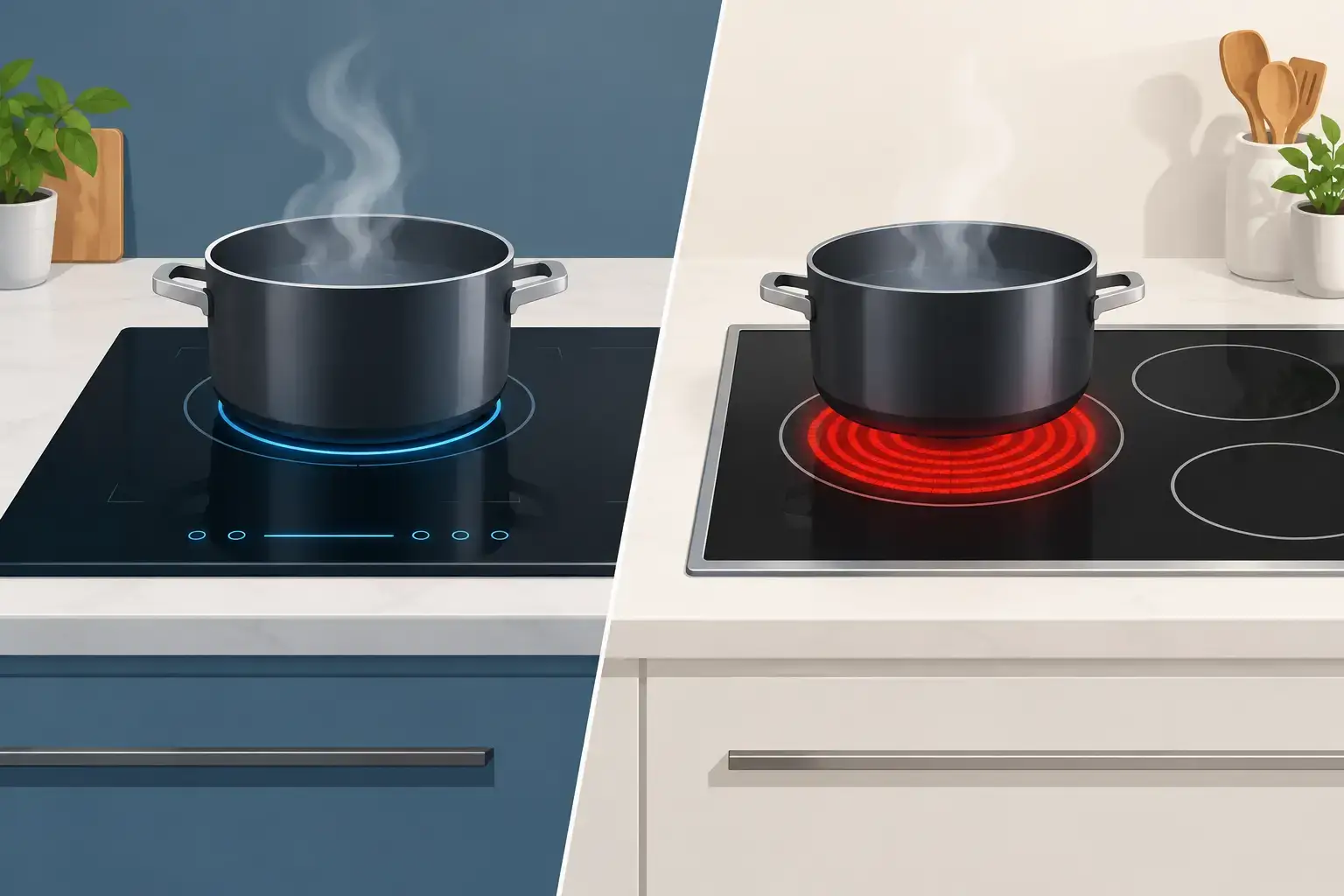
A busy weeknight puts a cooktop to the test. You may be bringing soup to a quick simmer while sautéing vegetables, keeping a sauce warm, and helping with homework between steps. The choice between induction versus radiant cooktops affects how quickly those meals come together, how much heat stays in the kitchen, and how effortless cleanup feels afterward.
Both are sleek electric cooking options that can bring a polished, modern look to a kitchen. Yet they produce heat in very different ways. The best choice is not simply the one with the newest technology. It is the surface that suits your cookware, cooking habits, kitchen setup, and expectations for daily convenience.
Induction Versus Radiant Cooktops: The Core Difference
An induction cooktop creates heat through magnetism. Beneath the glass surface, a coil produces a magnetic field that interacts with compatible cookware. The pan itself becomes the heat source, so energy is directed precisely where cooking happens.
A radiant cooktop uses electric heating elements below a smooth glass-ceramic surface. When an element is switched on, it glows or heats beneath the glass. The surface transfers that heat to the bottom of the pan, much like a traditional electric coil but with a cleaner, more refined appearance.
This difference explains much of the experience. Induction responds quickly because it heats the cookware directly. Radiant cooking takes more time to warm up and cool down because the glass surface and heating element retain heat. Neither approach is automatically better for every kitchen, but the distinction matters when speed, control, and safety are priorities.
Speed and Temperature Control
For households that cook frequently, induction is often the stronger performer. Water can reach a boil noticeably faster, and a temperature adjustment takes effect almost immediately. Turn the power down when a sauce begins to bubble too vigorously, and the pan responds with less delay. That degree of control supports everything from a delicate custard to a fast family stir-fry.
Radiant cooktops offer dependable heat, but they require more anticipation. Since the element remains hot after the setting is reduced or switched off, cooks need to account for residual heat. Experienced home cooks often use that retained warmth to finish rice, keep food warm, or gently complete a dish after active cooking ends.
For a restaurant line, demonstration kitchen, or household where multiple dishes are prepared at once, induction’s responsive control can help maintain a smoother workflow. For simpler cooking routines, radiant heat remains a practical and familiar option.
What precision feels like in daily cooking
Induction’s advantage is especially clear during quick transitions. A skillet can move from a high-heat sear to a gentle simmer without waiting for a burner to settle. This can reduce the risk of scorching sauces and overcooking ingredients.
Radiant surfaces ask for a little more attention, but they can still produce excellent results. The key is learning the cooktop’s heat retention and using it intentionally. A well-designed radiant cooktop gives cooks a stable, even cooking surface for everyday meals, from pancakes at breakfast to pasta sauce for a table full of guests.
Safety and Comfort Around the Cooktop
Because induction heats the pan rather than the surrounding glass, the area around the cookware generally stays cooler during use. The surface can still become warm from heat transferred back by the pan, so care is always needed. However, the lower residual heat can be reassuring in active family kitchens, especially where children may be nearby.
A radiant cooktop becomes hot across the active cooking zone and stays hot after cooking stops. Most models include hot-surface indicators, which are valuable reminders to avoid touching the glass until it has cooled. This residual heat is not a flaw, but it does call for more awareness during cleanup and serving.
Both styles offer meaningful safety benefits compared with an open flame. There is no exposed gas flame, and their smooth surfaces create a more streamlined work area. Features such as pan detection, control locks, timers, and automatic shutoff can add confidence, particularly in kitchens that serve many people throughout the day.
Cookware Compatibility Can Decide the Choice
Cookware is often the deciding factor in induction versus radiant cooktops. Induction requires magnetic cookware. Cast iron and many stainless steel pans work well, provided their bases are magnetic and flat. Aluminum, copper, glass, and some stainless steel cookware will not heat on induction unless they have a magnetic base layer.
A simple magnet test offers a useful first check. If a magnet adheres firmly to the bottom of a pan, it is likely compatible with induction. Still, cookware labels and manufacturer guidance should be checked before making a final decision.
Radiant cooktops are more flexible. Most flat-bottomed cookware can be used, including stainless steel, aluminum, copper-bottomed pans, and glass cookware approved for cooktop use. Flat, smooth pan bases are still important because they make better contact with the glass and promote more even heating.
If you have invested in a broad collection of favorite cookware and do not want to replace it, radiant may offer an easier transition. If you are ready to build around magnetic cookware, induction can reward that choice with exceptional responsiveness and efficiency.
Cleaning, Durability, and Everyday Appearance
Both cooktop types bring a clean, contemporary look that complements a modern kitchen. Without raised grates or traditional coil elements, the surface is easy to wipe down after cooking. A soft cloth and cooktop-safe cleaner are usually all that is needed once the glass has cooled.
Induction has one convenience edge: because the surrounding glass is less likely to become extremely hot, spills are less likely to bake onto the surface during cooking. On a radiant cooktop, sugary spills and sauces should be cleaned carefully as soon as it is safe to do so, since heat can cause residue to adhere more firmly.
Glass-ceramic surfaces are durable, but they deserve thoughtful use. Avoid dragging heavy cookware across the surface, and lift cast-iron pans rather than sliding them. Choose cookware with clean, smooth bottoms and avoid placing very hot lids or rough utensils directly on the glass.
Which Cooktop Fits Your Kitchen?
Choose induction when fast heating, precise control, and a cooler cooking environment are high on your list. It is a compelling fit for busy families, enthusiastic home cooks, and professional settings where timing and consistency shape the service experience. It also suits homeowners who want a refined electric cooking surface without sacrificing performance.
Choose radiant when you want a smooth electric cooktop with broad cookware compatibility and familiar operation. It can be an excellent choice for kitchens where existing pots and pans need to remain in use, or where the cooking style is more measured than fast-paced.
Installation should also be part of the decision. Both cooktops need the correct electrical supply, cutout dimensions, ventilation clearances, and professional installation that follows local codes. Higher-powered induction models may have specific electrical requirements, so reviewing the product specifications before cabinetry work begins can prevent costly changes later.
For commercial users, capacity and durability deserve equal attention. A cooktop that performs beautifully at home may not be the right answer for a high-volume kitchen. Consider the number of cooking zones, power output, duty cycle, pan sizes, cleaning demands, and the pace of the team using it. Equipment should support the way your kitchen actually works, not force your team to work around it.
A Choice That Supports Better Cooking Moments
The right cooktop should feel like a natural partner in the kitchen. Whether you prefer the rapid response of induction or the straightforward versatility of radiant heat, select a surface that helps you cook with confidence, serve with ease, and spend more time enjoying the moments gathered around the table.