
Cart 0

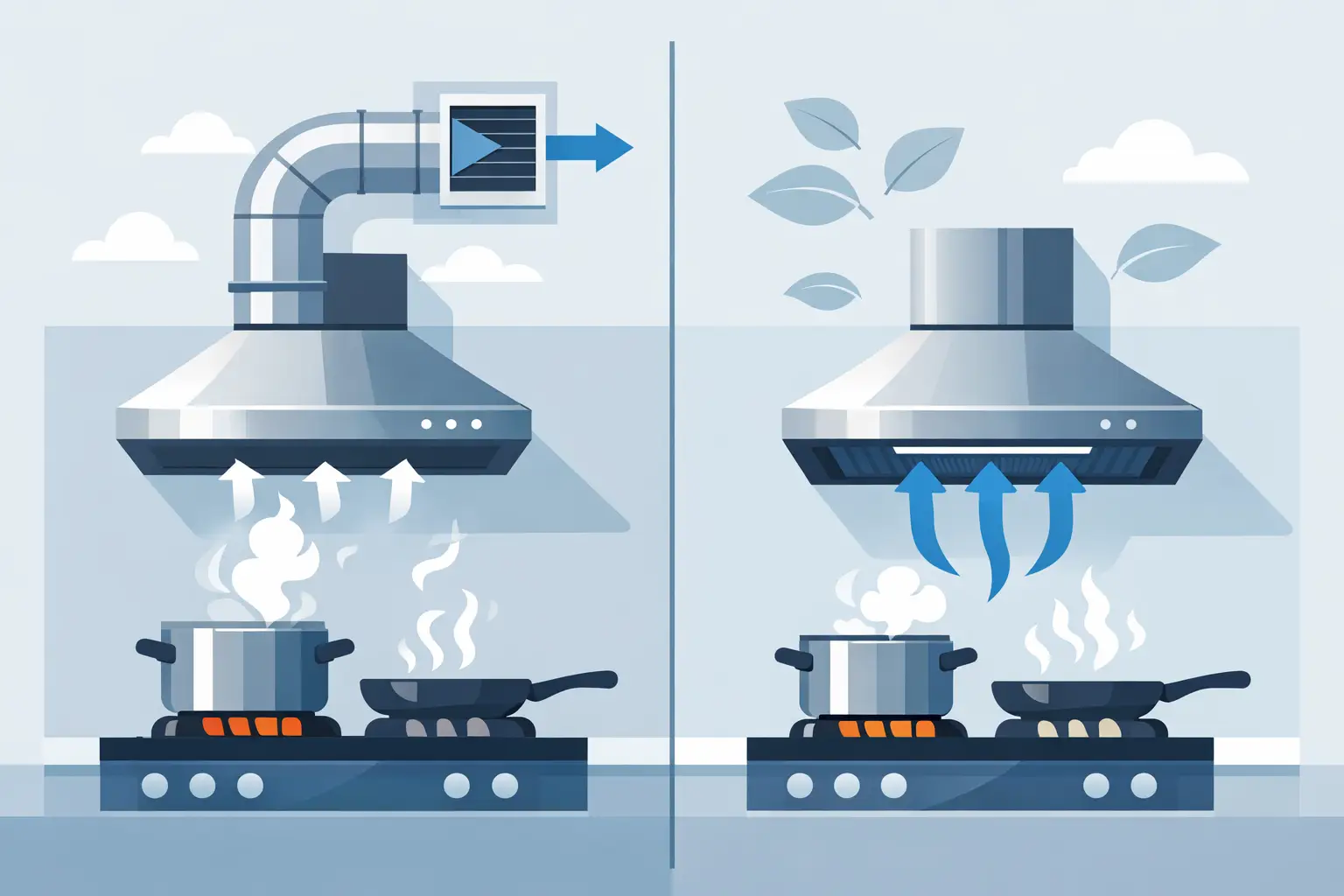
That first burst of smoke from a hot wok or searing pan tells you a lot about your kitchen. If the air clears quickly, cooking feels easy. If the room holds onto grease, heat, and odor, even a beautiful kitchen starts to feel less comfortable. That is why the range hood ducted vs ductless decision matters more than many homeowners expect.
A range hood is not just a finishing touch above the cooktop. It shapes how your kitchen smells, how warm it gets during meal prep, and how clean nearby cabinets and surfaces stay over time. For families who cook daily, hosts who entertain often, and food businesses that depend on steady performance, choosing the right ventilation style can improve the entire cooking experience.
Range hood ducted vs ductless: the core difference
The difference is simple, but the impact is significant. A ducted range hood pulls smoke, steam, grease, and cooking odors through filters and vents that air outside the building. A ductless range hood, sometimes called a recirculating hood, pulls air through filters and then sends it back into the kitchen.
That one distinction affects nearly everything else, from installation and maintenance to long-term performance. If your priority is stronger ventilation and better odor removal, ducted usually has the advantage. If your priority is easier installation, lower renovation complexity, or working within a space that cannot support exterior venting, ductless can be a smart and practical fit.
Neither option is universally better. The right answer depends on how you cook, what your kitchen layout allows, and how much performance you expect day after day.
When ducted range hoods make more sense
Ducted hoods are often the preferred choice for serious home cooks and demanding kitchens because they remove contaminated air instead of trying to clean and reuse it. That makes a noticeable difference when you cook with high heat, deep-fry, stir-fry, grill indoors, or prepare foods with strong aromas.
In a busy household kitchen, a ducted hood helps control lingering smells more effectively. Fish, spices, garlic, and fried foods clear out faster. Heat and humidity also leave the room instead of building up around the cooking area, which can make the kitchen more comfortable, especially in warmer climates.
For commercial settings or heavy-use kitchens, ducted ventilation is usually the stronger solution because it supports consistency. When cooking happens for long hours, air quality and heat control become operational issues, not just comfort issues. A more powerful venting system can help the team work better and help the space feel cleaner.
There is also the matter of grease. While both hood types use filters, ducted systems are generally better at moving grease-laden air away from the room entirely. That can reduce buildup on nearby walls, cabinets, and ceiling surfaces over time.
The trade-off is installation. A ducted hood needs access to an exterior vent path, and that may involve cutting through walls or ceilings, routing ductwork, and planning around structural limitations. In a new build or full kitchen remodel, that is often manageable. In an apartment, condo, or finished home with limited venting options, it can be more complicated and more expensive.
When ductless range hoods are the better fit
Ductless hoods appeal to many homeowners because they solve a real-world problem: not every kitchen can accommodate ductwork. If exterior venting is difficult, restricted, or simply too disruptive to install, a ductless system offers a cleaner path to adding ventilation.
This is especially useful in apartments, compact homes, kitchen upgrades with limited construction work, or spaces where preserving the design layout matters. Installation is typically easier, faster, and less invasive. For many households, that convenience is a major advantage.
A ductless hood can still improve the cooking environment by capturing grease and reducing some odors through charcoal or carbon filters. For lighter cooking habits, such as simmering, reheating, boiling, or preparing simple family meals, it may provide enough day-to-day support.
Design flexibility is another reason people choose ductless. Because there is no duct run to plan around, placement may be simpler, and the final look can stay clean and modern. For homeowners focused on both function and elegant kitchen design, that matters.
The trade-off is performance ceiling. Ductless hoods do not remove heat and moisture from the home the way ducted systems do. They also depend heavily on filter quality and regular replacement. If maintenance slips, performance drops. And if your cooking style is bold, frequent, and high heat, a ductless model may feel less effective than you want.
Performance, noise, and maintenance
When comparing range hood ducted vs ductless options, people often focus first on installation. Performance in daily use deserves just as much attention.
Ducted systems usually deliver stronger ventilation because air exits the home. That often leads to better smoke capture and more reliable odor control. In many kitchens, that means a fresher room after cooking and less grease settling on surfaces.
Noise can vary with either type, depending on motor quality, fan speed, and construction. A well-built ducted hood may sound quieter in practice because it moves air out efficiently. A ductless hood can sometimes seem louder at similar effort levels because it is working to filter and recirculate air rather than expel it. That said, product quality matters more than labels alone. A premium model in either category can feel far more refined than an entry-level one.
Maintenance is where the two systems clearly differ. Ducted hoods still need grease filter cleaning, but ductless units usually require more attention because charcoal filters must be replaced regularly to keep odor reduction effective. That ongoing upkeep adds cost over time and asks more from the owner.
If you want the lowest-effort path over the long run, ducted tends to be easier to live with once installation is complete. If you want the simplest upfront setup and are comfortable replacing filters on schedule, ductless can still be a very workable choice.
How your cooking habits should guide the choice
The best range hood is the one that matches the way your kitchen actually works. A family that cooks quick weeknight meals a few times a week does not need the same ventilation strategy as a passionate home chef making smoky stir-fries every night. A restaurant or high-output food business is in an entirely different category.
If your kitchen sees frequent frying, searing, wok cooking, or spicy dishes with strong aromas, ducted is usually worth the investment. You will feel the difference in air quality, comfort, and cleanup.
If your cooking is lighter and your renovation options are limited, ductless may deliver the convenience and style you need without major construction. For many households, that balance is enough.
It is also worth thinking about the future, not just your current routine. A kitchen renovation is a long-term decision. If you expect to cook more often, upgrade your appliances, or use the space more actively for entertaining, choosing stronger ventilation now can save frustration later.
Kitchen layout matters more than most people realize
A practical decision on ventilation often starts with your floor plan. An exterior wall near the cooking zone makes ducted installation more straightforward. Island cooktops, interior apartment layouts, and multi-story routing challenges can make ductwork more complex.
Ceiling height, cabinet design, and the distance between the hood and cooktop also affect results. Even a powerful hood performs poorly if it is the wrong size or mounted incorrectly. That is why the smartest approach is not just asking which type is better. It is asking which type fits the kitchen structure, the cooking load, and the visual style you want to maintain.
For modern homes, appearance matters too. A hood should support the room, not fight against it. Today’s best kitchen solutions blend performance with a clean, refined presence, which is exactly what many homeowners and business owners expect from a serious appliance investment.
So which one should you choose?
Choose ducted if performance is the priority, especially for frequent cooking, stronger odors, higher heat, and long-term air quality. Choose ductless if installation flexibility, lower renovation complexity, and a streamlined upgrade path matter most.
For many buyers, the real answer is not about picking the more advanced category. It is about choosing the system that works confidently in your space, every day, without creating compromises you will notice later. A well-chosen hood supports faster cleanup, a fresher kitchen, and a more enjoyable cooking rhythm.
If you are building a kitchen that is designed to make life easier, ventilation deserves the same attention as your cooktop or oven. Get that choice right, and every meal feels a little more comfortable from the first sizzle to the last shared plate.